
By: Sk Md Assad Armaan
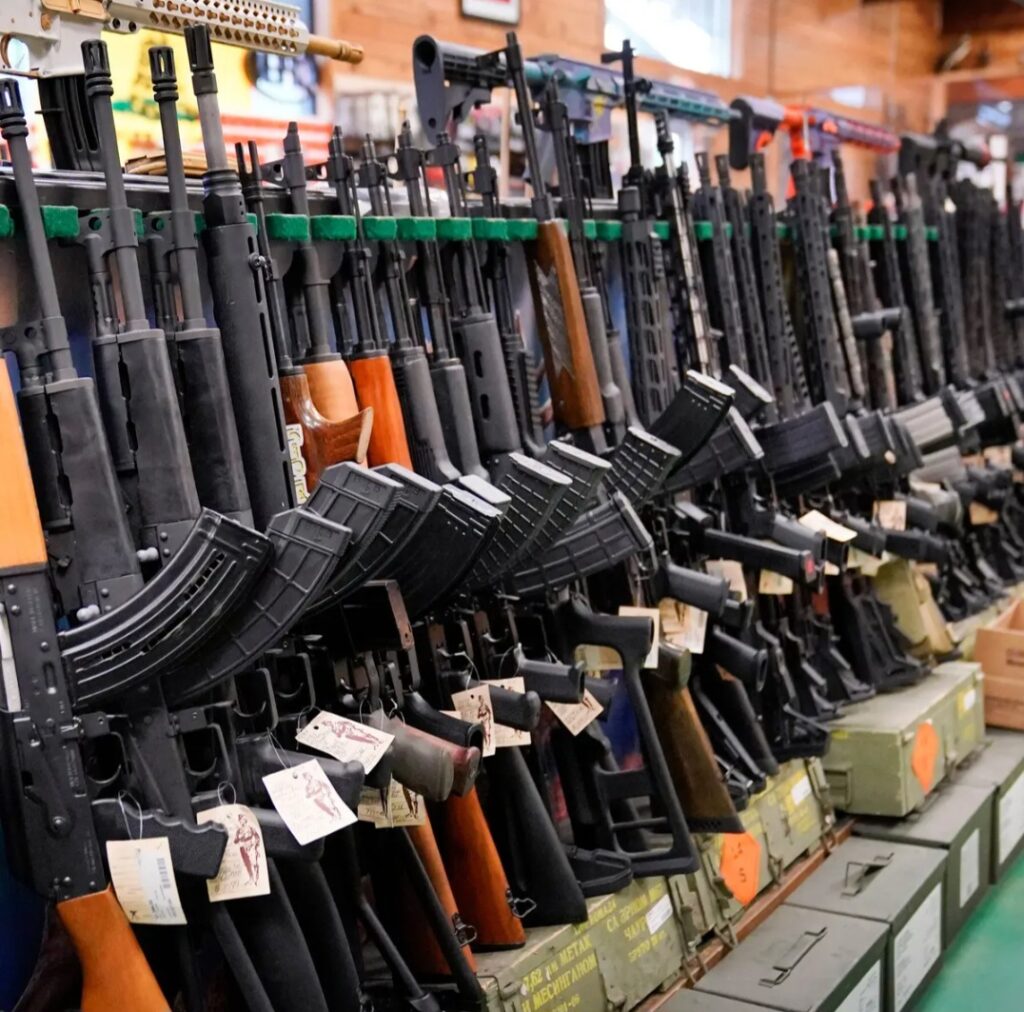
Gun culture in the United States of America is rooted in social, historical and political nuances that shape public consciousness. The relationship of Americans with guns is unlike most other countries not because of the high number of firearms in circulation but because gun holds a symbolic place within the identity of the nation. For many Americans, firearms are symbol of freedom, individuality and the right to self-defense. But this very idea of freedom creates a contrasting reality which is painful in nature. This reality is shadowed by mass shootings, public insecurity, and cycle of grief. The foundation of gun rights in US is built on the Second Amendment of the United States Constitution which declares the right to bear arms and this guarantee have transformed into a cultural equation that connects gun ownership with liberty. However, gun violence illustrates a dual paradox: the very freedom meant to empower citizens continuously undermines their safety. This tension between liberty and security portrays the centrality of the gun problem.
To understand how guns created this level of conflict, one must shed light on the nation’s past. The roots of gun culture can be traced back to the colonial period of American history, when firearms were necessary for survival. During the American Revolution, guns were tools of resistance against British authority, helping shape the stage of resistance led by citizens as defenders of their own freedom. Over time, this event became a national mythology. Guns were not just weapons; they became symbols of courage and independence. Gun ownership turned from a practical necessity into a cultural right, handed down across generations as tradition. Even today, many households view guns as symbolic objects representing American heritage. This strong presence of gun culture makes any attempt at gun control sensitive and socially contested.
Why Guns Matter: Identity and the American Psyche
Gun Culture is therefore not merely a problem of ownership, but of identity and emotional attachment. Firearms are embedded in the idea of personal freedom and societal insecurity. Many Americans believe that owning a gun depict their autonomy and resist any form of governmental overreach. This narrative is often through popular media and political speeches that glorify gun ownership as a symbol of pride. As a result, guns were normalized in everyday life to such an extent that they have evolved into a portrayal of responsibility rather than a collective threat. The idea of “more guns mean more safety” has remained normalized even when reality challenges it. The political spectrum of this idea is the most important thing. The National Rifle Association, among other lobbying groups, plays a significant role in shaping public attention and legislative actions. This group mainly uses the idea of patriotism to generate the narrative of how gun regulation negatively affects the spirit of America. So, any proposal to regulate gun ownership is associated with loss of liberty. In many states political campaigns often side with gun ownership as it’s linked with widespread voter expectations. The issue thus creates safety concerns and takes the form of identity politics where regulation is perceived as surrender. The emotional dimension of gun culture is portrayed in social situations and its transmission. Families pass firearms to younger generations as a symbol of legacy, and children learn to view guns through the lens of honor and adulthood. This creates a never-ending cycle in which guns are seen as the norm. In such a society, legislative regulation becomes tough because challenging a belief system is harder than ending a habit.
Law enforcement also comes within this cultural domain. Police officers in the United States often assume that civilians may be armed during routine interactions. This creates a sense of caution which often escalates situations into violent outcomes. Civilians, on the other hand, fear that the state might misuse its authority. Thus, both sides act with tension, producing conflict that can turn confrontational. In contrast, nations with stricter gun laws report fewer violent cases between civilians and police, suggesting that America’s gun culture plays a big role in shaping insecurity among the people. Therefore, gun culture is not only about private ownership; but also, about the influence it has on institutions and public perceptions.
Gun Violence as a National Crisis: Social, Economic and Moral Costs
While guns represent power and freedom for many Americans, the effects of widespread firearm ownership have created a country marked by fear. Mass shootings now occur with alarming frequency. Schools, malls, music concerts, parks and places of worship have all become potential targets. Children conduct safety drills as routinely as fire drills, portraying how violence has grasped educational spaces. These insecurities reflect the psychological burden of gun culture in society. Recent incidents demonstrate the reality of this crisis. In Nashville on March 27, 2023, a school shooting led to multiple casualties. On May 6, 2023, a mass shooting at Allen Premium Outlets in Texas left communities shattered. In 2024, violence at Michigan State University and shootings in Maine signaled that no region is safe. Even by early 2025, reports from educational campuses, neighborhoods and public gatherings continued to make headlines, proving that gun violence exists without restriction. Each traumatic event cause grief, debates, and then silence and this cycle continues until the next event.
Beyond the burden on humans lies a heavy economic cost as well. Medical treatment for gunshot survivors, rehabilitation programs, hospital care, and insurance claims require extensive financial resources. Experts estimate that the United States spends billions of US dollars annually managing the effects of gun violence, funds that could instead support education, or welfare. Communities also suffer long-term trauma; families mourn lives lost, children grow up with fear, and public trust weakens. These wounds do not heal easily, and survivors often live with emotional scars. To mitigate this crisis policy reforms are the main long-term solutions but due to political polarization the situation gets more complex. Supporters of strong gun laws promote background checks and limits on assault weapons. However, the argument regarding constitutional rights halts any mobilization towards legislative action. Variations in state laws create loopholes, where individuals can legally purchase firearms in states with lenient rules. The illegal circulation of weapons further complicates the situation, making enforcement difficult without unified national laws. This tension between public grief and political stagnation illustrates that gun violence is not only a law-and-order debate but a cultural conflict. It raises questions about how the United States balances historical freedom with contemporary security.
Possibilities for Change: Rethinking Safety and Reform
Social media today plays a dual role in shaping the gun debate. Graphic images of violence circulate rapidly which sometimes inspire movements by youth who refuse to accept gun violence as the norm. Pro-gun groups, meanwhile, defend firearms as liberty, creating a debate driven more by ideology than evidence. This dualism widens social gaps and acts as a barrier to reforms. However, Global experiences indicate that reform is possible. Following the Port Arthur massacre in April 1996, Australia implemented strict gun regulations which reduced mass shootings significantly. Nations such as the United Kingdom and Japan also maintain low gun violence through strong regulations. These examples challenge the notion that regulation threatens freedom; instead, they show that the essence of freedom gets fulfilled when people feel secure. This debate reflects a deeper philosophical divide between rights-based individualism and communitarian notions of collective welfare. A rights-oriented point of view argues that the individual’s freedom to bear arms should remain constant, even if the risks are shared socially. Communitarians, on the other hand, believe that personal rights must be negotiated alongside social responsibility and the well-being of the community. America historically gives more importance to the rights of the individual, whereas many other nations prioritize collective safety. This tension explains why gun control becomes more than a policy question.
Yet, the United States continues to resist similar reforms because gun ownership remains deeply tied to national identity and history. Change therefore requires not only laws but gradual transformation in mindset. The way forward must amalgamate policy, awareness and community effort. Strengthening mental health support, especially youth and veterans. Community initiatives on conflict resolution and emotional management can rebuild trust and secure safety. Responsible ownership through background checks, licensing, and training could protect rights while enhancing security. Reform is not an attack on liberty but a necessary action to ensure freedom with responsibility.
Conclusion
Gun culture in the United States is not simply a product of weapon ownership but a reflection of how history, politics and identity have merged into a national narrative. The symbolism attached to guns makes reform emotionally complex. It brings into conflict the desire for individual liberty and the need for collective safety. This contrast shapes debates about politics, influences elections, divides communities, and defines how the world views America today. It reveals a society torn between legacy and modernity, where ideals born in the 18th century coexist with 21st-century realities that consist of a violent appearance. The persistence of gun violence shows that the present cannot remain governed by the past alone. As mass shootings increase, Americans are forced to question whether a right intended to protect lives can continue to justify the loss of so many. A right becomes meaningful when it promotes human dignity, not when it endangers it. The grief of families, trauma of students and fear within public spaces demonstrate that the cost of inaction is no longer abstract; it is a living reality. No democratic society functions on rights alone; it should enhance responsibility and empathy, and the recognition that freedom is a collective experience.
In the end, the gun debate in America is not just about firearms; it is about what kind of society the nation wishes to be. One defined by fear or by safety? By tradition alone or by progress linked to empathy? The answer will determine not only legislation, but the future character of the country. As the United States continues to struggle between the ideals of freedom and the pain of violence, the question remains: how many more lives must be doomed before freedom and safety learn to coexist?



