
By: Khushbu Ahlawat, Consulting Editor, GSDN
Introduction
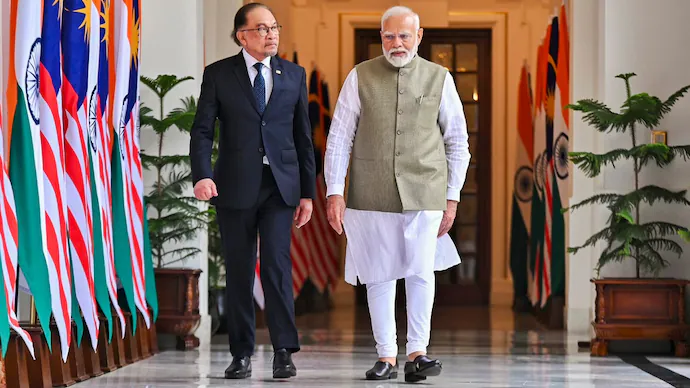
India–Malaysia relations have entered a phase of strategic consolidation that reflects wider transformations within the Indo-Pacific order. Anchored in diaspora linkages, strengthened by expanding trade flows, embedded within ASEAN institutional frameworks, and shaped by maritime realities, the bilateral relationship is acquiring structural depth. The elevation of ties to a Comprehensive Strategic Partnership (CSP) in August 2024 marked not merely a diplomatic upgrade but a recognition that both countries’ long-term strategic trajectories are increasingly intertwined. In a geopolitical environment characterised by intensifying great-power competition, uncertainty in transatlantic alignments, and mounting pressure on ASEAN cohesion, India and Malaysia are recalibrating their engagement to reflect converging economic and security imperatives. Rather than episodic diplomacy driven by summitry, contemporary India–Malaysia ties are defined by layered interdependence: a 2.75 million-strong Indian-origin community in Malaysia, bilateral trade approaching US$20 billion, growing defence coordination, and increasing alignment within ASEAN-centred security platforms. Together, these dimensions position the relationship as a quiet but consequential pillar within the wider ASEAN–India architecture and the evolving Indo-Pacific strategic order.
Historical Foundations: From Post-Colonial Solidarity to Strategic Maturity
The foundations of India–Malaysia relations predate Malaysia’s independence, rooted in colonial-era labour migration that brought large numbers of Indians—particularly Tamils—to Malaya. These early movements created enduring social and cultural linkages that continue to shape bilateral engagement. Following Malaya’s independence in 1957, diplomatic relations were established promptly, framed by post-colonial solidarity and shared participation in the Non-Aligned Movement. Leaders such as Jawaharlal Nehru and Tunku Abdul Rahman envisioned cooperation among newly independent Asian states as central to preserving sovereignty amid Cold War rivalries. However, during the Cold War decades, engagement remained cordial but limited, shaped largely by economic exchanges, Commonwealth connections, and multilateral cooperation. The relationship lacked the strategic intensity seen in contemporary ties, partly due to differing regional priorities and limited economic complementarities.
A substantive shift began in the 1990s with India’s Look East Policy, which sought to reintegrate India economically and strategically with Southeast Asia. Malaysia, under the leadership of Mahathir Mohamad, was itself championing Asian economic cooperation and South–South solidarity. Mahathir’s advocacy of the “Look East” ethos in Malaysia and India’s outreach to ASEAN created parallel trajectories that facilitated greater economic engagement. Bilateral trade expanded steadily, particularly in palm oil imports, infrastructure cooperation, and construction services. The signing of the Comprehensive Economic Cooperation Agreement (CECA) in 2011 institutionalised these economic linkages, embedding them within a rules-based trade framework.
The relationship gained further strategic momentum when India’s Look East Policy was revitalised as the Act East Policy under Narendra Modi. This recalibration moved beyond commerce toward defence, maritime security, and connectivity. India’s economic liberalisation and Malaysia’s export-oriented industrialisation created new complementarities in energy, commodities, and manufacturing, while defence dialogues and naval engagements gradually expanded. Nevertheless, periodic political tensions and domestic sensitivities—particularly regarding diaspora politics and public commentary on internal affairs—occasionally slowed progress. These episodes, however, did not fundamentally derail the trajectory of engagement, as institutional mechanisms provided resilience against short-term diplomatic strain.
The elevation of ties to a Comprehensive Strategic Partnership (CSP) in 2024 represents the culmination of a gradual transition from cultural proximity to strategic convergence. The CSP formalised cooperation across defence, digital economy, semiconductors, green technology, and counter-terrorism. Recent events underscore this deepening. The Malaysia–India Defence Cooperation Committee (MIDCOM) meeting in February 2025 expanded discussions on maritime domain awareness and defence industry collaboration. In January 2026, India and Malaysia co-chaired the Experts Working Group on Counter-Terrorism under the ASEAN Defence Ministers’ Meeting Plus, conducting a joint Table Top Exercise that highlighted growing operational coordination. Concurrently, negotiations to modernise the ASEAN–India Trade in Goods Agreement (AITIGA) reflect Malaysia’s support for strengthening ASEAN–India economic integration amid global supply-chain disruptions.
Scholarly interpretations view this evolution as part of a broader Indo-Pacific recalibration. Analysts such as C. Raja Mohan argue that India’s engagement with Southeast Asia is increasingly strategic rather than merely economic, reflecting recognition that ASEAN centrality is critical to maintaining a balanced regional order. Malaysian scholars similarly emphasise pragmatic hedging—deepening ties with India as a complementary partner without alienating major powers. From this perspective, the CSP is less about alliance formation and more about embedding bilateral cooperation within inclusive regional frameworks that prioritise stability, maritime security, and economic resilience.
Thus, the contemporary phase of India–Malaysia relations is neither abrupt nor accidental. It is the product of decades of incremental engagement, institutional layering, and shared adaptation to changing geopolitical realities. The 2024 Comprehensive Strategic Partnership formalises a recognition on both sides that bilateral cooperation must extend beyond trade and diaspora linkages toward coordinated responses to maritime security, technological disruption, supply-chain vulnerabilities, and transnational threats. In doing so, it transforms a historically cordial relationship into one of strategic maturity within the Indo-Pacific landscape.
Economic Interdependence and Emerging Strategic Sectors
Economic engagement constitutes the backbone of India–Malaysia relations. Bilateral trade has demonstrated resilience despite global economic volatility, reaching approximately US$19.8–20 billion in 2024–25. India’s exports—valued at roughly US$7.3 billion—are driven primarily by petroleum products, engineering goods, and chemicals, while imports from Malaysia, amounting to approximately US$12.5 billion, are anchored by palm oil, electronics, and machinery. This asymmetry reflects Malaysia’s role as a key supplier of critical commodities and components within regional value chains. As one of India’s key ASEAN trading partners, Malaysia occupies an important position in New Delhi’s broader regional economic calculus, particularly at a time when supply-chain diversification and energy security have become central policy priorities.
Beyond trade flows, investment dynamics reveal a gradual pivot toward long-term capital integration. Malaysian foreign direct investment in India stands at approximately US$1.29 billion, with announced plans of up to US$1 billion in multi-sector projects spanning infrastructure, logistics, renewable energy, and services. These developments signal movement away from transactional trade toward a structural economic partnership grounded in capital flows and industrial cooperation. The review and modernisation of the ASEAN–India Trade in Goods Agreement (AITIGA) further underscores the shared commitment to strengthening ASEAN–India economic integration. Malaysia’s support for concluding a revised AITIGA reflects a belief that deeper economic interdependence stabilises regional markets and fortifies ASEAN–India ties against geopolitical volatility, particularly amid disruptions caused by protectionist trends and technological decoupling.
Emerging sectors increasingly define the strategic trajectory of bilateral economic ties. Semiconductor cooperation, digital economic integration, financial connectivity initiatives including Unified Payments Interface (UPI) linkages, and infrastructure collaboration illustrate the shift toward technology-driven engagement. Malaysia’s well-developed electronics manufacturing ecosystem, particularly in semiconductor assembly and testing, complements India’s push to expand its domestic chip fabrication and design capabilities. As global supply chains diversify amid US–China strategic competition, these complementarities acquire strategic significance. Digital payments cooperation and fintech integration aim to reduce transaction friction, facilitate SME participation in cross-border trade, and enhance financial transparency.
Recent high-level engagements have reinforced this technological and investment-oriented pivot. During discussions following the 2024 Comprehensive Strategic Partnership, both sides explored collaboration in semiconductor value chains, green hydrogen initiatives, and digital public infrastructure, including interoperability frameworks linked to India’s UPI ecosystem. Malaysian investment agencies have signalled interest in India’s production-linked incentive schemes, particularly in electronics and renewable energy sectors, while Indian firms are expanding participation in Malaysia’s technology parks and services sector. Analysts such as C. Raja Mohan argue that India’s economic engagement with Southeast Asia increasingly reflects strategic pragmatism—leveraging trade and technology partnerships to secure supply-chain resilience without entering rigid alliance structures. Malaysian scholars similarly interpret deeper economic ties with India as a hedging strategy that diversifies external economic partnerships beyond major-power dependencies. In this context, economic cooperation transcends commerce; it becomes a stabilising instrument of middle-power statecraft in the Indo-Pacific, reinforcing resilience against systemic shocks while embedding both economies within broader regional production and innovation networks.
Maritime Convergence and Defence Institutionalisation
Maritime geography lies at the strategic heart of India–Malaysia relations. Malaysia’s position along the Strait of Malacca and its proximity to the South China Sea situate it at a critical maritime crossroads through which a substantial proportion of global trade flows. For India, over 55 percent of external trade transits these waters, rendering maritime security in Southeast Asia a core national interest. Consequently, cooperation with Kuala Lumpur has expanded steadily in defence and naval domains.
Institutionalised mechanisms such as the Malaysia–India Defence Cooperation Committee (MIDCOM), convened most recently in February 2025, provide continuity and structure to bilateral defence engagement. Regular exercises including Harimau Shakti and Samudra Laksamana enhance operational familiarity and interoperability. Moreover, both countries participate actively in the ASEAN Defence Ministers’ Meeting Plus (ADMM-Plus), which serves as a central platform for ASEAN-led security cooperation. In January 2026, India and Malaysia co-chaired the ADMM-Plus Experts Working Group on Counter-Terrorism and conducted a Table Top Exercise, signalling increasing coordination in addressing non-traditional security threats.
This maritime and defence collaboration reflects alignment on shared priorities: combating piracy, addressing maritime terrorism, enhancing cyber resilience at sea, and strengthening humanitarian assistance and disaster relief capabilities. Importantly, the partnership operates within ASEAN-centric frameworks, thereby reinforcing ASEAN centrality rather than undermining it. In contrast to overtly alliance-based arrangements, ASEAN-led mechanisms prioritise inclusivity and consensus, allowing India to deepen security ties without exacerbating regional polarisation. As strategic competition intensifies in the Indo-Pacific, such calibrated engagement reduces friction within ASEAN while strengthening collective responses to emerging challenges.
Diaspora Diplomacy and Societal Anchoring
What distinguishes India–Malaysia relations from many other bilateral partnerships is their deep societal foundation. Malaysia hosts approximately 2.75 million Persons of Indian Origin and an estimated 225,000 Indian nationals, representing around nine percent of Malaysia’s population. This long-settled community, particularly rooted in Tamil language and culture, serves as a socio-economic bridge between the two countries. Far from being a symbolic link, the diaspora plays a tangible role in business networks, educational exchanges, and political familiarity.
Recent initiatives highlight the strategic recognition of diaspora linkages. Agreements on audiovisual co-production, expanded welfare frameworks for overseas Indians, scholarship programmes such as the Thiruvalluvar Scholarship, Technical and Vocational Education and Training collaboration, and the ‘Study in India’ programme collectively strengthen people-to-people connectivity. Scholars of diaspora diplomacy argue that stable, integrated communities act as stabilisers in bilateral relations, reducing misperceptions and cushioning diplomatic turbulence during periods of political strain. In the India–Malaysia context, the diaspora underwrites trust and continuity, embedding the relationship within social structures that transcend political cycles.
Moreover, cultural and educational cooperation supports long-term resilience. Expanded student mobility, joint research initiatives, and industry-academia partnerships can transform symbolic exchanges into institutionalised collaboration. By investing in human capital linkages, both countries enhance the durability of their strategic partnership, ensuring that geopolitical shifts do not easily disrupt bilateral momentum
Conclusion: From Strategic Alignment to Enduring Regional Pillar
The future trajectory of India–Malaysia relations will depend on the effective operationalisation of the Comprehensive Strategic Partnership. While recent high-level engagements have produced a flurry of memoranda of understanding across sectors, sustained implementation remains critical. Defence cooperation must evolve beyond exercises toward joint maritime domain awareness initiatives, interoperability in emerging domains such as cyber and space, and potentially cooperative defence production. Economic engagement would benefit from finalising the AITIGA review, deepening semiconductor ecosystem integration, and expanding digital payments connectivity to reduce transaction friction for small and medium enterprises.
Embedding bilateral initiatives within ASEAN-centric platforms will remain essential. By strengthening coordination within ADMM-Plus, ASEAN–India Joint Cooperation mechanisms, and broader Indo-Pacific frameworks, India and Malaysia can reinforce norms of openness and multilateralism while defusing zero-sum pressures arising from great-power rivalry. Both countries have explicitly condemned cross-border terrorism and rejected double standards in global counter-terrorism regimes, signalling convergence on broader security principles that extend beyond the bilateral sphere.
In conclusion, India–Malaysia relations are undergoing a process of strategic consolidation that reflects deeper structural trends in the Indo-Pacific. Anchored in a large and historically embedded diaspora, sustained by nearly US$20 billion in trade, institutionalised through defence mechanisms such as MIDCOM and ADMM-Plus engagement, and aligned around ASEAN centrality and maritime security, the partnership is evolving into a regionally stabilising force. Unlike headline-driven strategic alignments, this relationship is characterised by calibrated convergence—quiet, pragmatic, and institutional. If effectively implemented, the Comprehensive Strategic Partnership could transform India–Malaysia ties into a strategically embedded and operationally relevant pillar within Southeast Asia and the wider Indo-Pacific, reinforcing an inclusive and rules-based regional order at a time of mounting geopolitical fragmentation.

About the Author
Khushbu Ahlawat is a research analyst with a strong academic background in International Relations and Political Science. She has undertaken research projects at Jawaharlal Nehru University, contributing to analytical work on international and regional security issues. Alongside her research experience, she has professional exposure to Human Resources, with involvement in talent acquisition and organizational operations. She holds a Master’s degree in International Relations from Christ University, Bangalore, and a Bachelor’s degree in Political Science from the University of Delhi.



