
By:Sonalika Singh, Consulting Editor, GSDN
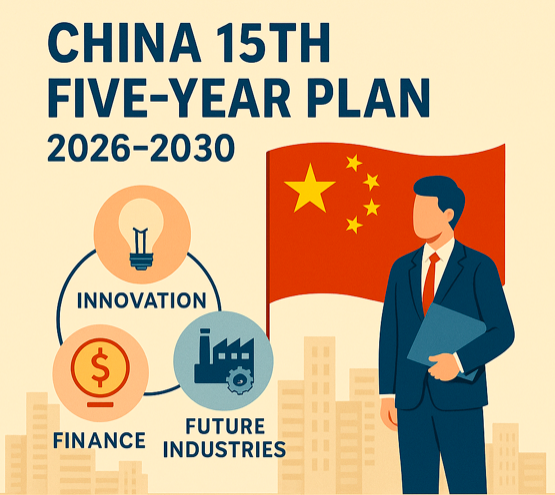
China’s Fifteenth Five-Year Plan (2026–2030) represents a pivotal moment in the country’s long-term development trajectory, reflecting both continuity with past strategies and a recalibration in response to evolving domestic and global realities. As one of the most important policy instruments in China’s governance framework, the Five-Year Plan serves not merely as an economic guideline but as a comprehensive blueprint aligning political priorities, industrial strategy, social development, and national security objectives. The latest plan emerges at a time marked by intensifying geopolitical competition, structural economic adjustments, and rapid technological transformation. Consequently, it provides critical insight into how China intends to navigate uncertainty while consolidating its position as a global economic and technological power.
At its core, the Fifteenth Five-Year Plan reinforces the centrality of technological self-reliance and industrial upgrading as the twin engines of future growth. Building on the foundations laid during the Fourteenth Five-Year Plan, the new framework places even greater emphasis on the transition from innovation development to innovation application. This shift reflects a maturing innovation ecosystem in which the challenge is no longer solely about achieving breakthroughs but about scaling those breakthroughs into commercially viable and globally competitive industries. In this regard, the plan underscores the importance of embedding advanced technologies, particularly artificial intelligence, robotics, quantum computing, and biotechnology across the entire industrial value chain. Rather than treating these technologies as isolated sectors, the plan integrates them into a broader strategy of economic transformation, aiming to enhance productivity, reduce dependence on foreign inputs, and strengthen resilience against external shocks.
Industrial modernization occupies a central position in the plan, signaling a strategic pivot toward high-quality manufacturing and value-chain upgrading. Unlike earlier development phases, where China relied heavily on labor-intensive production and export-driven growth, the current approach seeks to reposition the country as a leader in advanced manufacturing. This includes not only the development of emerging industries such as new energy vehicles, biomanufacturing, and aerospace, but also the upgrading of traditional sectors like steel, petrochemicals, and textiles. The emphasis on “new quality productive forces” reflects an ambition to combine digitalization, automation, and green technologies to create a more efficient and sustainable industrial system. Importantly, this strategy does not imply abandoning lower-end manufacturing; instead, China aims to maintaincompetitiveness across the entire spectrum of production while simultaneously moving up the value chain.
A defining feature of the Fifteenth Five-Year Plan is its strong focus on technological self-sufficiency as a matter of national security. This orientation is shaped by the increasingly restrictive global technology environment, particularly export controls and supply chain disruptions that have exposed vulnerabilities in critical sectors such as semiconductors and advanced materials. In response, the plan outlines a comprehensive approach to reducing reliance on foreign technologies, including increased investment in research and development, the expansion of national laboratories, and the promotion of domestic innovation ecosystems. The target of maintaining annual growth in R&D expenditure above 7 percent, alongside efforts to increase high-value patents and the contribution of digital industries to GDP, highlights the scale of this commitment. At the same time, the plan emphasizes the role of enterprises as key drivers of innovation, supported by policies such as tax incentives, venture capital development, and enhanced intellectual property protection.
While the technological and industrial agenda dominates the plan, there is also a clear recognition of the need to rebalance China’s growth model by strengthening domestic demand. For decades, China’s economy has been characterized by a heavy reliance on investment and exports, with household consumption playing a relatively limited role. The Fifteenth Five-Year Plan seeks to address this imbalance by promoting income growth, improving employment opportunities, and expanding the availability of high-quality goods and services. Measures to boost consumption include fiscal initiatives such as consumer subsidies and trade-in programs, as well as structural reforms aimed at enhancing social security and stabilizing household expectations. However, the plan’s approach to consumption remains closely linked to supply-side improvements, reflecting a belief that expanding high-quality supply will, in turn, stimulate demand. This approach suggests a gradual and controlled rebalancing rather than a dramatic shift toward consumption-led growth.
The plan also places significant emphasis on the development of the service sector, particularly in areas such as healthcare, education, tourism, and cultural industries. This reflects both changing consumption patterns and the need to create new sources of employment in an economy facing demographic challenges, including an aging population and a shrinking workforce. The concept of the “silver economy,” which focuses on products and services for elderly consumers, is particularly prominent, indicating a strategic effort to turn demographic pressures into economic opportunities. At the same time, the expansion of digital services and the integration of online and offline consumption channels are expected to play a key role in shaping future demand.
Another important dimension of the Fifteenth Five-Year Plan is its approach to foreign investment and economic openness. Despite the strong emphasis on self-reliance, the plan does not signal a retreat from global engagement. Instead, it advocates a more selective and strategic form of opening, aimed at attracting high-quality foreign investment in sectors aligned with China’s development priorities. This includes advanced manufacturing, high technology, modern services, and green industries. The plan also outlines measures to improve the business environment for foreign companies, such as reducing the negative list for market access, enhancing regulatory transparency, and facilitating cross-border data flows. However, this openness is carefully balanced with efforts to safeguard economic security and maintain control over critical sectors, reflecting a nuanced approach to globalization in an era of increasing geopolitical tension.
Financial reform constitutes another key pillar of the plan, with a focus on supporting real economic activity while maintaining systemic stability. China’s leadership appears committed to avoiding the risks associated with excessive financial liberalization, opting instead for a model of “controlled dynamism” in which financial innovation is encouraged but closely regulated. The development of digital finance, including the continued rollout of the digital yuan, is a central component of this strategy, offering new tools for enhancing efficiency and oversight. At the same time, efforts to channel capital toward strategic industries, particularly through venture capital and government-guided funds, highlight the role of finance as an instrument of industrial policy.
The real estate sector, which has been a major source of economic volatility in recent years, is addressed in the plan through a framework of stabilization and restructuring. Rather than relying on property as a primary driver of growth, the plan seeks to reposition it as a more sustainable and balanced component of the economy. This includes measures to support affordable housing, promote urban renewal, and address the financial risks associated with overleveraged developers. By integrating real estate into a broader strategy of urban development and social welfare, the plan aims to mitigate systemic risks while maintaining its contribution to economic stability.
In addition to economic and industrial priorities, the Fifteenth Five-Year Plan reflects a broader shift toward integrated national development, where economic policy is closely linked with social, environmental, and security objectives. The emphasis on green and low-carbon development, for instance, highlights China’s commitment to addressing climate change while simultaneously advancing its leadership in renewable energy and related technologies. Targets for reducing carbon intensity, increasing the share of non-fossil energy, and improving environmental quality underscore the importance of sustainability as a core component of future growth.
At the governance level, the plan introduces measures aimed at improving policy coordination and reducing inefficiencies associated with local competition and duplication. The concept of addressing “involution,” or excessive and unproductive competition among firms and regions, reflects an awareness of the need for more efficient resource allocation. Initiatives such as building a unified national market, reforming fiscal and tax systems, and aligning local incentives with national priorities are intended to enhance the overall effectiveness of China’s development strategy.
The international implications of the Fifteenth Five-Year Plan are significant. By prioritizing technological self-reliance, industrial upgrading, and domestic demand, China is positioning itself to operate more independently in a fragmented global economy. At the same time, its continued engagement with global markets, particularly through targeted opening and participation in international standards-setting, suggests a strategy of shaping rather than withdrawing from globalization. This dual approach combining internal consolidation with selective external engagement has the potential to reshape global trade patterns, investment flows, and technological ecosystems.
Therefore, China’s Fifteenth Five-Year Plan represents a comprehensive and forward-looking strategy designed to navigate a complex and uncertain global environment. It reflects clear recognition that the country’s future growth will depend not only on the scale of its economy but also on the quality and resilience of its development model. By emphasizing technological innovation, industrial modernization, and domestic demand, while maintaining a measured approach to openness and financial reform, the plan seeks to balance competing priorities and manage inherent trade-offs. Ultimately, its success will depend on the effectiveness of implementation and the ability to adapt to evolving domestic and international conditions. Nevertheless, the plan provides a clear indication of China’s strategic direction and its ambition to secure a leading position in the global economy over the coming decades.

About the Author
Sonalika Singh began her journey as an UPSC aspirant and has since transitioned into a full-time professional working with various organizations, including NCERT, in the governance and policy sector. She holds a master’s degree in political science and, over the years, has developed a strong interest in international relations, security studies, and geopolitics. Alongside this, she has cultivated a deep passion for research, analysis, and writing. Her work reflects a sustained commitment to rigorous inquiry and making meaningful contributions to the field of public affairs.



