
By: Lt Col JS Sodhi (Retd), Editor, GSDN
Giulio Douhet, the famous Italian army general, regarded as the Father of Strategic Air Power’s statement in the 20th Century “Victory smiles upon those who anticipate the changes in the character of war, not upon those who wait to adapt themselves after the changes occur,” holds equal if not more weight in the 21st Century too, as modern warfare now encompasses six official domains and numerous unofficial domains.
On January 17, 1999, the 8th anniversary of the outbreak of the Gulf War, two People’s Liberation Army (PLA) officers, Colonel Qiao Liang and Colonel Wang Xiangsui released their book “Unrestricted Warfare: China’s master plan to destroy America”. The date chosen for release of the book had special significance as the Gulf War of 1991 was the first war of the modern era in which computers were used to take out the daily flight plans of over 1000 fighter aircrafts that were operating in Iraq as part of the US-led 42-nation multi-coalition force. For the first time ever, computers were used in live military operations.
The 196-page well-written book had just a simple message to convey that anything that can be weaponised, will be weaponised. The book did not garner much interest in the USA for many years after its release, till it was too late and China had overtaken the USA in economic, military and diplomatic power. The book now is a compulsory-read in most of the US military training institutions and combat formations. A typical example of “Too little, too late”.
After the success of the Gulf War of 1991, militarily known as Operation Desert Storm, which lasted from January 17, 1991 to February 28, 1991 saw the USA led 42-nation coalition, exhibiting unprecedent level of professionalism that included a whopping 1000 aircraft sorties being undertaken daily, which were totally decided by computers based on the daily inputs given, USA promulgated the Full Spectrum Operations Doctrine in 2001, replacing the Airland Battle Doctrine of 1982.
The Full Spectrum Operations Doctrine of 2001enshrined that the cumulative effect of dominance in air, land, maritime, space domains and information environment that includes cyberspace, that permits the conduct of joint operations without effective opposition or prohibitive interference. This would espouse a strategic intent capable of achieving full spectrum superiority in a conflict, enabling the control of any situation across the range of military operations, by defeating any adversary.
Surprisingly, China became the only nation in the world to publicly declare its competency and capability to fight any nation in the world in consonance with the Full Spectrum Operations Doctrine. In 2014, PLA in its military doctrine called Joint Integrated Operations stated that it is ready to fight any country anywhere in the world in all the six-domains of war consisting Land, Sea, Air, Cyber, Electromagnetic Spectrum and Space.
Interestingly, such a declaration has not been made till date by any other military of the world including USA, who despite propounding the Full Spectrum Operations Doctrine in 2001, lay basking in its success of the 1991 Gulf War, whilst China stealthily and secretly worked towards establishing supremacy in the full spectrum operations warfare, pretty much understanding well how the future modern wars would be fought.
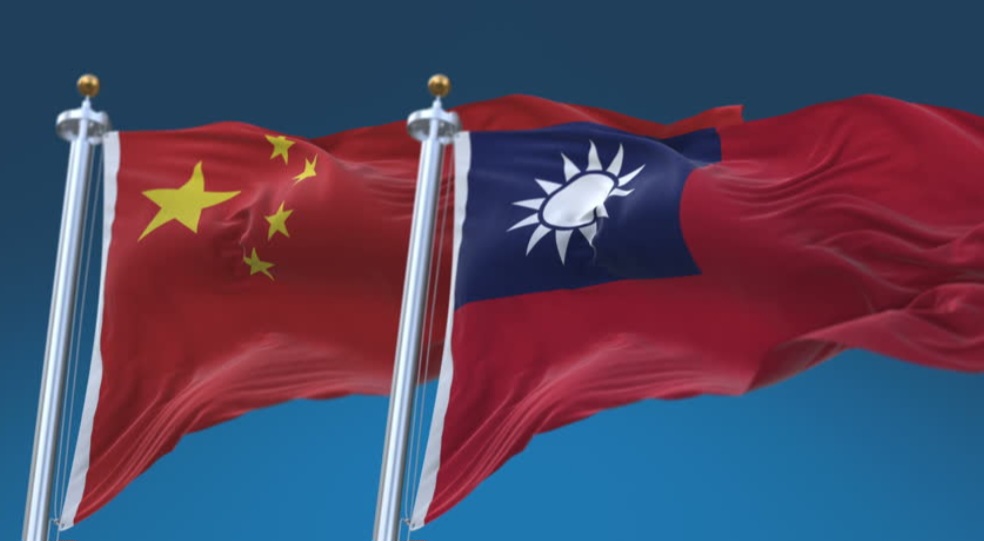
For China, the first and foremost military aim is annexing Taiwan.
China’s earlier military attempts for Taiwan
The past six decades have seen three major conflagrations between China and Taiwan which are called as the First, Second and the Third Taiwan Strait Crisis.
The First Taiwan Strait Crisis also called as the Formosa Crisis occurred during the period September 03, 1954 to May 01, 1955. It was a brief conflict between China and Taiwan over a group of islands in the Taiwan Strait that were under Taiwan but China staked claim over them by shelling the Kinmen Island. Subsequently China seized Yijiangshan Islands from Taiwan. This led to Taiwan abandoning the Tachen Islands. This conflict saw 519 Chinese soldiers and 393 Taiwanese soldiers killed. This crisis ended after the USA threatened the use of nuclear weapons on China and the erstwhile USSR refused any help to China. This crisis also resulted in the Formosa Resolution of 1955 and the Sino-American Mutual Defence Treaty between USA and Taiwan.
The Second Taiwan Strait Crisis also called as the 1958 Taiwan Strait Crisis took place during August 23-December 02, 1958 saw China shelling the Kinmen and Matsu Islands. It included a naval battle between China and Taiwan which saw the Taiwanese Navy getting the better of the PLA Navy. This conflict saw 514 Chinese soldiers dead and 460 Taiwanese soldiers killed. China saw it’s one ship and two fighter jets destroyed whilst Taiwan lost 31 fighter jets. The US Navy sent additional warships to the Taiwan Strait as a show of strength of its support to Taiwan. This further escalated the Chinese aggression. This crisis ended as China was faced with a stalemate as its artillery had run out of shells and China declared a unilateral ceasefire as the US Navy moved the warships in the Taiwan Strait.
The Third Taiwan Strait Crisis which lasted from July 21, 1994 to March 23, 1996 was a result of a series of missile tests conducted by China in the waters surrounding Taiwan as a strong signal to the Taiwanese government under Lee Teng-hui who was seen as having a strong foreign policy and to intimidate the Taiwanese electorate in the run-up to the 1996 presidential election. The US sent its naval Seventh Fleet which included the aircraft carriers USS Independence and USS Nimitz. Seeing the heavy American military build-up in the Taiwan Strait, China ended this crisis quietly without any loss of life on either side.
There were two important lessons that China learnt from the earlier failed three military attempts for Taiwan – lack of nuclear weapons and a small navy.
During the First & Second Taiwan Strait Crisis, China had no nuclear weapons. China with the aid of USSR under President Nikita Khrushchev, began its nuclear programme in 1958 and subsequently conducted in first nuclear test in Lop Nur, Xinjiang on October 16, 1964 under a project codenamed as Project 596. Since then, China has progressed steadily and at the end of 2024 possesses 600 nuclear weapons with the aim of acquiring 1000 nuclear weapons by 2030 and 1500 by 2035.
To capture Taiwan, Xi Jinping realised that China has to have a formidable navy as not only Peoples Liberation Army Navy (PLAN) will play a pivotal role in the military operations for Taiwan, but it will also have to be formidable enough to take on the US Navy, which in 2013 was the biggest navy in the world, with 287 warships and submarines, while China had 273 warships and submarines in the same year.
Clearly, the numbers were grossly inadequate of PLAN to take on the might of the US Navy and to deal with multiple maritime challenges like securing the South China Sea and the Malacca Strait Dilemma, in case China was to go to war with USA over Taiwan.
Xi Jinping was clear that China’s national maritime power had to stepped-up if the China Dream was to materialise. Though the PLAN had surpassed the US Navy in size in 2015 but Xi Jinping was not contended with such statistics. In April 2018, Xi Jinping stated that “the task of building a powerful navy has never been urgent as it is today”. China’s 2019 Defence White Paper encapsulated the need for a modernised and strong navy that is capable of carrying out missions in the far seas. With this in mind, PLAN was told to construct two aircraft carriers, 21 nuclear submarines and 200 warships by 2030.
In comparison 55 warships and submarines of the US Navy are under construction while 67 warships and submarines of the Indian Navy are being constructed.
Work on constructing the warships and submarines started in right earnest in the six biggest and important shipyards of China – Bohai, Dalian, Jiangnan, Hudong Zhonghua, Wuchang and Huangpu Wenchong.
The results bore fruits. As of 2024 the PLAN with a lead of 90 warships and submarines over the US Navy, has 370 warships and submarines whilst the US Navy has 280 warships and submarines. In contrast, the Indian Navy has 150 warships and submarines as of 2024 whilst the Taiwan Navy has 90 warships and submarines.
China’s war for Taiwan in 2027
On February 03, 2023, William Burns, the Director of Central Intelligence Agency (CIA), USA officially tasked with gathering, processing and analysing national security information from around the world, said in a statement that USA and China will go to war over Taiwan in 2027. On January 17, 2024 Grant Shapps, the British Defence Secretary warned of multiple war theatres opening up in the next five years which would involve Russia, China, Iran and North Korea.
Admiral Samuel Paparo, the Commander of the US Indo-Pacific Command on October 28, 2024 said that China is carrying out the largest military buildup since World War II, perhaps in world history. And this year, on May 31, 2025, Pete Hegseth, the US Defence Secretary warned that China is actively training to invade Taiwan.
President Xi Jinping on October 06, 2023 while on a visit to Indonesia to attend the Asia Pacific Economic Summit told Vincent Siew, the Taiwanese envoy to the summit that the issue of Taiwan being physical part of China cannot be passed from generation to generation. A clear indication, that during Xi Jinping’s term in office the issue of Taiwan would be settled once and for all.
Since the Third Taiwan Strait Crisis ended in 1996, China is now the undisputed leader in all the six domains of modern warfare – land, sea, air, cyber, electromagnetic spectrum and space. Given Russia’s unwavering support to China and USA’s disinterest in the Indo-Pacific region clearly evident in US’ National Security Strategy 2025 made public on December 04, 2025 shows that the three Superpowers are now in an informal alliance called the G3 which this author had correctly predicted in his article on August 31, 2025. USA’s National Security Strategy 2025 talks of “spheres of influences” and disregards Russia & China as threats.
In March 2025, the American Portrait Survey found that 59.6% Taiwanese citizens do not consider the United States trustworthy. The Brookings Institution Report released on April 25, 2025 noted that 60.9% of the Taiwanese disagreed with the statement that “Taiwan is safer than before with Trump as President”. The Taiwanese are absolutely correct and the National Security Strategy 2025 of USA puts all speculations to rest whether USA will aid Taiwan in case of a military aggression by China on the island nation.
Further, the US military has lost its might to take-on the PLA, even if by quirk of circumstances the USA decides to aid Taiwan militarily. On April 12, 2025, Pete Hegseth, the Defence Secretary of the 47th US President Donald Trump’s administration shocked the world when in a candid statement he admitted that China’s hypersonic missiles could destroy the 11 US Navy aircraft carriers in just 20 minutes. He further added that in every war game conducted in the US Military, the Americans always loose to the Chinese. War games are conducted in all militaries the world over to assess the readiness of military strategies and are designed to simulate real-war scenarios.
The Pentagon’s “Overmatch Brief”, the US government’s top-secret document submitted in 2021 but whose details have come in the public domain on December 11, 2025 unambiguously states that China would defeat the US militarily in any conflict over Taiwan.
Ukraine has lost about 20% of its territory (roughly the size of Taiwan) to Russia in the ongoing war between the two neighbours and President Donald Trump has time and again made it clear that Ukraine will never get back this territory as and when this war ends. The USA or any other NATO nation will not help Taiwan militarily.
And, Taiwan alone is incapable of taking on the Chinese military might.
Time for Military Alliance
With USA pulling away from the Indo-Pacific region as clearly enumerated in its National Security Strategy 2025, the Quad has virtually collapsed as was evident after President Donald Trump’s inauguration on January 20, 2025 and so has AUKUS.
In almost eleven months of President Donald Trump’s second Presidential tenure, no Quad heads of state summit involving USA, India, Japan and Australia has been held. The way USA is going hammer and tongs on India, it is unlikely that any Quad heads of state summit will be held till President Donald Trump’s tenure comes to an end on January 20, 2029.
The Royal Navy of the United Kingdom has announced its decision on December 09, 2025 to reduce its deployment and overseas training in the Indo-Pacific region for a period of four years. Thus, the AUKUS alliance comprising USA, the United Kingdom and Australia too has slipped into comatose.
The Indo-Pacific region stands open for China. And with Taiwan falling, the next two wars that China will wage will be for Spratly Islands and Arunachal Pradesh in India.
The time is now opportune to form a military alliance between the six nations Taiwan, India, Philippines, Vietnam, Japan and South Korea which are to go to war with China in the next ten years for three reasons. One, there is no military alliance that exists in the Indo-Pacific Region amongst the countries that are facing the maximum threat due to China’s ever increasing military power. Two, China only understands a strong military language and these seven countries are incapable as on date to fight China singly. Three, no nation has ever won a two-front war.
With the near-collapse of Quad and AUKUS, there is no alliance whatsoever in the Indo-Pacific region which can stand against the growing Chinese aggressiveness. USA, the main pivot of both Quad and AUKUS is no longer the force that is interested in keeping the Indo-Pacific region free and open as envisaged in the “Free and Open Indo-Pacific” strategy, also known as the FOIP strategy or simply as the Indo-Pacific Strategy published by the United States Department of State as a formalised concept on November 04, 2019.
History is replete with examples of the formidable strength the military alliances have. The most striking example being the North Atlantic Treaty Organisation whose Article 5 clearly states that an attack on any one NATO member-nation will be deemed as attack on all member-nations. No wonder, Russia till date hasn’t attacked any NATO member-nation.
General MM Naravane (Retd), the 28th Chief of the Army Staff of the Indian Army wrote on July 29, 2023 that no nation has ever won a two-front war. China, if confronted with the two-front war threat of engaging militarily with Taiwan on its eastern part and with India on its western part, will not make the move of attacking Taiwan.
With the growing proximity of China, Pakistan & Bangladesh, the security situation for India too is becoming grim. General Anil Chauhan, the Chief of the Defence Staff of the Indian Armed Forces on July 08, 2025 remarked that the convergence of interest between China, Pakistan and Bangladesh will have implications for India’s stability and security dynamics.
2027 isn’t too distant away. Stephen Kinzer’s quote “Alliances and partnerships produce stability when they reflect realities and interests” holds deep meaning for the Indo-Pacific region and Asia where China’s reality of its military aims is no secret and for countries like Taiwan, India and the other littoral nations of the South China Sea, the interests have converged to stop China’s hegemonic designs. A military alliance is the only answer. Any delay will be detrimental, for the fall of Taiwan will spell disaster for democracy and rules-based world order.

About the Author
Lt Col JS Sodhi (Retd) is the Founder-Editor, Global Strategic & Defence News and has authored the book “China’s War Clouds: The Great Chinese Checkmate”. He tweets at @JassiSodhi24.



