
By: Rudraksh Saklani, Research Analyst, GSDN
As the world polarizes and transitions simultaneously into a newer era of geopolitical reordering, from an erstwhile unipolar world with an evidently overbearing hegemon to an increasingly multi-polar world, where strategic autonomy and diversification of supply chains are becoming the flavours of the season, the shift is conspicuous.
A democratic world order is rather expected to be governed by rules and guided by diversity, equity, inclusivity and sustainability. However, due to the existing international forums (especially the United Nations, Group of 7 etc.) inability to manage conflicts, if not prevent them, the world is in the middle of wars and armed conflicts across the board. Old power structures seem to be faltering and paving the way for realignment and reforms, and old ways of thinking demand a long-due reset. For they are the remnants of a global order of the past which is no longer relevant.
Introductory Backdrop
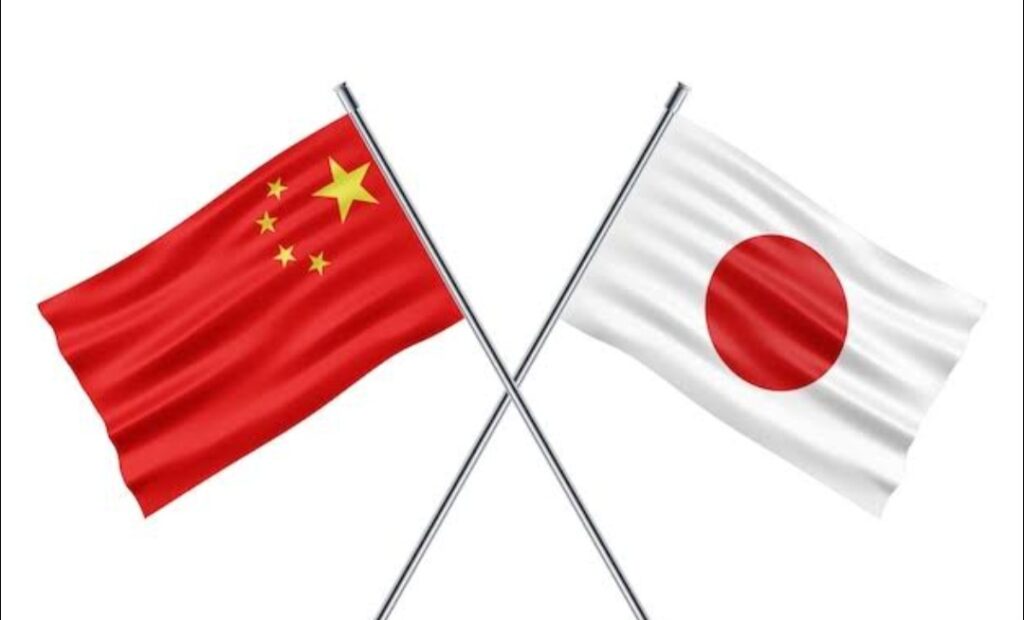
The Asian continent, in particular, has been in a constant state of violent flux. An inflection point in this regard finds itself in the middle of simmering tensions in East Asia between China and Japan. At the core of the ongoing deadlock is a deepening strategic rivalry. In November 2025, Japanese Prime Minister Sanae Takaichi stated in parliamentary comments that a Chinese assault on Taiwan might pose an “existential crisis” for Japan, highlighting Tokyo’s increasing readiness to openly connect its security to Taiwan’s situation, a sensitive topic in Beijing’s security considerations.
China has subsequently urged Tokyo to withdraw these statements, viewing them as meddling in its domestic matters, while implementing counteractions against Japanese citizens, including visa limitations and asset freezes on a former chief of the Japanese Self-Defense Forces, reflecting Beijing’s readiness to impose even symbolic penalties. What initially seemed like sharp diplomatic language has, consequently, echoed to this day as military signaling, economic responses, and ideological stances not just between Beijing and Tokyo but also across the broader Indo-Pacific and overall geopolitical framework.
Immediate trigger – The Taiwan question
The Taiwanese issue has been central to the geopolitical divisions between China and Japan. For China, a unification in Taiwan has been confirmed as a key national goal, with leaders occasionally describing this unification as an essential endeavor for the rejuvenation of the Chinese nation. As a result, remarks regarding Taiwan’s sovereignty, particularly from nearby countries, have not been taken well by Beijing.
Tokyo’s increasing engagement in strategic declarations and actions related to the situation in the Taiwan Strait and related land and air patrols symbolically herald an upcoming challenge to the territory regarded as a sovereign zone by the Chinese government and is perceived by Beijing as a collaboration between the Taiwanese and US governments. This participation has increased the likelihood of operational errors. Tokyo’s stance is reinforced by domestic Japanese views on Chinese military modernization as a direct threat to Japan’s peace and stability.
Diplomatic fallout
Japan has formally lodged a protest regarding recent events, as Chinese fighter jets are said to have activated their radar systems on Japanese planes in the vicinity of Okinawa, indicating a significant increase in operational risk. Reports of confrontations between the coast guard vessels of each side concerning the Diaoyu/Senkaku Islands are still coming in.
Beijing has responded with diplomatic actions, including sanctions on a former Japanese defense official, visa restrictions, frozen assets, and advisories to Chinese citizens against traveling to Japan. This diplomatic spat has now extended into various other domains. Symbolic relationships, like China’s “panda diplomacy” towards Japan, have started to weaken. For example, Japan’s Ueno Zoo has started planning the return of the giant pandas to China in 2026, which many in Japan now view as having been unintentionally politicized due to the current geopolitical climate.
Western media emphasizes increasing tensions as a facet of regional great-power rivalry, whereas Asian experts characterize it as a “stable instability” dynamic where competition endures without direct confrontation—yet carries significant risk.
Historical context through the theoretical lens of International Relations
A historical mistrust exists between Japan and China, stemming from the Second World War and the ongoing territorial conflict over the islands in the East China Sea. Examining the study and evaluation of the tense situation between the two East Asian countries today through the lens of Constructivism in international relations, it is reasonable for the topics of identity as well as historical and social norms to emerge.
The core of this idea suggests that state actions are shaped not only by material power but also by identity, memory, and stories. In China, Japan is portrayed as an aggressor and the Chinese as victims of brutality within a specific historical context, while in Japan, China is increasingly depicted as an authoritarian force that endangers post-war ideals of peace. Although compromises may be essential and reasonable, they become politically costly when historical identity stories take precedence.
Geostrategic analysis
Research performed by Japanese think tanks, including the Japan Institute of International Affairs (JIIA), indicates that mutual distrust is a fundamental characteristic of Japan-China bilateral relations. This is due to the decline of trust between the two nations caused by disruptions in people-to-people exchanges during the pandemic.
For Beijing, the military strategies of Japan and fresh interpretations of the pacifist Constitution are seen as remilitarization, a notion that has been consistently highlighted by China’s Ministry of Foreign Affairs. Chinese state media and editorial commentary often portray Japanese security reforms as alarmingly aggressive. China Daily, for instance, condemned Tokyo’s rise in defense spending and confrontational language, stating that such a strategy might lead to significant economic burdens for Japan by reallocating resources and possibly igniting inflation and financial pressure.
Bilateral tensions are matched by escalating negative public sentiments on each side, creating further obstacles to diplomatic reconciliation. These social-psychological dynamics influence media stories and policy discussions, often resulting in political costs for achieving compromise. Extremist perspectives leverage historical disputes and nationalistic feelings to rationalize more forceful measures, whereas moderates struggle to promote reconciliation without facing political consequences.
Strategic rivalry and economic dimension
The relationship between China and Japan illustrates the interplay of territorial disputes, collective memories, alliances, and dynamics of great power politics. The global impact of events in 2025 extends from New Delhi to Washington, from Brussels to Canberra.
These dynamics are closely linked to the broader U.S.-China strategic competition that influences the geopolitical landscape in the Indo-Pacific. Additionally, there exists a Japanese security alliance with the U.S. that is constitutionally guaranteed yet politically debated. The U.S. stance of strategic ambiguity regarding the People’s Republic of China’s (PRC) claim over Taiwan has complicated Japan’s ability to determine what commitments it seeks from Washington. The PRC views Japan’s growing defense alliances with the U.S. and other nations in the Indo-Pacific as a form of containment.
Although diplomatic relations are strained, the economic ties between China and Japan are significant, leading to a blend of tensions and motivations in their interactions. China remains an important trading partner for Japan across numerous sectors and a vital investor in Japan’s industrial and technological systems. Analysts from the Asia Pacific Initiative contend that economic rivalry is progressively viewed through a geo-economic perspective as supply chains undergo changes, semiconductor competition intensifies, and both nations aim to diversify or safeguard essential resources.
As per data from Japan’s Ministry of Foreign Affairs, the overall trade volume between China and Japan totaled US $292.6 billion in 2024, establishing China as Japan’s primary trading partner (exports roughly 17.6% of Japan’s overall exports, imports about 22.5%). China ranks as Japan’s third largest overall export market. Tourism statistics indicate that China continues to be a major contributor of foreign tourists to Japan, yet the growth has decelerated following the tensions, highlighting how geopolitical tensions are affecting wider economic relationships.
Consequences for the region, the world
Taiwan has now become a fault line as rising tensions heighten worries in Taipei and other Asia-Pacific nations regarding the stability of the Taiwan Strait. Heightened Japanese military activities and statements about defense readiness on islands close to Taiwan mirror wider concerns over Chinese assertiveness. Countries in ASEAN (Association of Southeast Asian Nations) frequently maintain a balance in their relationships with both powers. Japanese soft power and economic relations are viewed as a counter to China’s assertiveness, and Japan’s stance—both symbolically and materially—could enhance Tokyo’s influence over regional nations as a result of these tensions.
The flare-ups, in the meantime, increase pressure on South Korea and small Pacific nations to define their defense and diplomatic positions—often considering Chinese Communist Party (CCP) diplomacy alongside wider security assurances from the U.S. and its partners. Conversely, the U.S. firmly supports Japan in several of these conflicts—such as the recent radar lock dispute—as a component of its larger Indo-Pacific strategy. Recent affirmations regarding the U.S.-Japan alliance indicate Washington’s desire to deter China without engaging in direct conflict. Japanese analysts point out that Trump-era tariff policy represents a significant geopolitical risk for Tokyo, introducing economic unpredictability.
Representing the Global South and being one of the world’s rapidly growing major economies, India approaches these developments with strategic interest, pragmatic realism, and geopolitical prudence. Tokyo’s strong position aligns with Delhi’s apprehensions regarding China’s regional assertiveness and expansionist ambitions, likely enhancing informal cooperation via frameworks such as the Quadrilateral Security Dialogue (QUAD). On the other hand, India simultaneously engages economically with both powers, necessitating cautious adjustment.
Russia’s Eurasian agenda and Japan-Russian territorial talks have been factors within Japan’s security thinking in the past. A strengthened Japan-U.S. alliance might make Russia’s politics in the Far East trickier. Europe views the escalation from the perspective of economic stability and the implications of NATO-level security.
Africa’s strategic partnerships with Chinese investment and infrastructure would sustain, yet the great-power competition might increase the distraction of Chinese resources and priorities. The South Asian economies that are connected with the Chinese market might experience the secondary effects of the changes in investment patterns across the globe.
Environmental impact
A clash between China and Japan would significantly impact the environment, particularly the delicate marine ecosystems in the East China Sea and the Western Pacific. Military operations, missile firings, and potentially harmful impacts on critical marine infrastructure would threaten fishing stocks, coral reef systems, and marine organisms due to oil spills and chemical leaks. Escalating tensions over common fishing areas would additionally result in resource depletion.
On land, destructive infrastructure and sabotage may result in the pollution of air and water sources with hazardous materials, while long-term consequences could include diminished fish populations, food insecurity, and disruption of endeavors related to global warming and ocean governance in East Asia, which is already reeling under challenges from climate change.
Potential technological disruptions and role of seas and the ocean
It would also significantly disrupt global technology ecosystems, considering both nations’ importance to advanced manufacturing, semiconductors, robotics, and essential materials. Japan is crucial to the worldwide tech supply chain (so is Taiwan), providing high-precision components, semiconductor production equipment, specialty chemicals, sensors, and advanced machinery. China is, in contrast, a leading center for electronics assembly, processing, and extensive manufacturing integration.
An increase in military activity would probably lead to export restrictions, sanctions, cyber actions, and the use of supply chains as a weapon. Semiconductor manufacturing would be one of the initial victims, as Japan provides essential components to chipmakers in Taiwan, South Korea, and the U.S. Global disruptions may postpone chip production, impacting automobiles, AI technologies, consumer electronics, and defense systems. The risks associated with cyber security would increase as state-sponsored cyber activities aim at infrastructure, satellites, data centers, and communication systems. Aside from hardware, technological decoupling (or de-risking) would speed up. Companies would need to replicate supply chains, elevating expenses and hindering innovation. Eventually, this disintegration would compromise efficiency and heighten inflationary pressures.
The maritime arena is central to the tensions between China and Japan. The East China Sea, encompassing the Senkaku/Diaoyu Islands, represents not just a territorial conflict but a strategic area where sovereignty, energy security, and international law converge. Control over adjacent waters impacts resource access, military mobility, and essential sea lines of communication (SLOCs). Japan relies on continuous maritime routes for its energy and trade, making it a trading nation tied to the sea. China, limited by the first line of defence (chain of islands) perceives maritime expansion as crucial for overcoming strategic encirclement and securing naval access to the Pacific. Consequently, both nations are increasingly dependent on coast guards, naval patrols, submarines, and aerial resources in crowded waters, heightening the chances of incidents and escalation.
The surrounding seas and ocean—in particular, the Sea of Japan, the Philippine Sea and the Western Pacific—also link these tensions with wider Indo-Pacific dynamics. Submarine deployments, carrier movements, and freedom-of-navigation operations heighten deterrence but also amplify the risks of miscalculation.
Way forward
Consequently, East Asia is presently facing a profound security dilemma. This indicates that as one party strengthens its security, it inadvertently reduces the security of the other, resulting in a cycle of escalating measures. While an all-out conflict isn’t a current objective and today’s era is anyways not of war, the chances can still not be ruled out due to the underlying factors linked to a state of alienation.
To address this instability, it is necessary to establish engagement channels, enhance confidence, and implement a strategic distrust decoupling, concerning economic cooperation. Regardless, it is clear that tensions between China and Japan have transcended an Asia-focused context and are now regarded as “global variables” in the new geopolitical landscape of the 21st century.

About the Author
Rudraksh Saklani is postgraduate in History from the University of Delhi with graduation in the same discipline. He possesses solid analytical and communication skills honed through intense academic training and has diverse internship experience, including with the Ministry of Panchayati Raj, Government of India. His research internship experience at The Indian Journal for Research in Law and Management has allowed him familiarization with law and management-related contemporary themes and case studies. He is an alumnus of The Army Public School, Dhaula Kuan, New Delhi where he scored perfect 10 CGPA in Class X and 92% in Class XII and was the Head Boy of the school.



