
By: Sk Md Assad Armaan, Research Analyst, GSDN
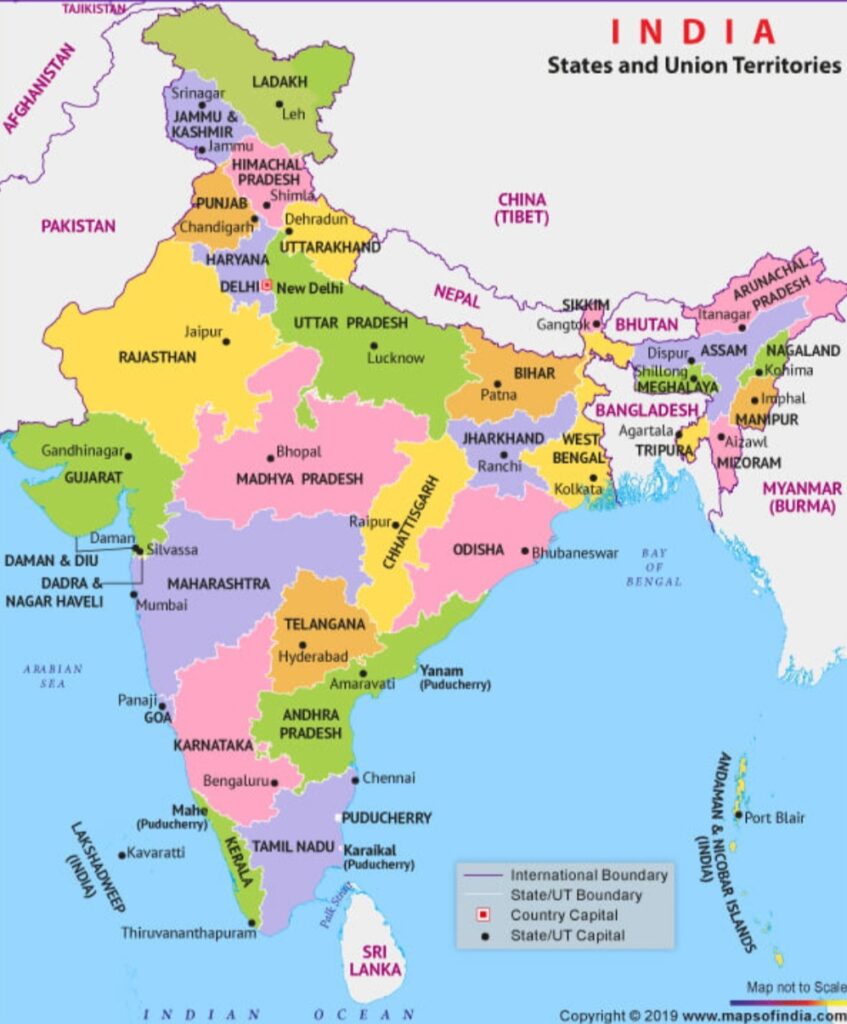
In December 2025, the United States Department of Defense’s Annual Report to Congress on Military and Security Developments Involving the People’s Republic of China introduced a subtle but significant shift in how Beijing’s territorial priorities are understood. For the first time, China’s claims over Arunachal Pradesh referred to by Beijing as “South Tibet” were placed within the language of core interests. This categorization carries major strategic weight. In Chinese strategic doctrine, “core interests” are not negotiable claims; they are issues over which Beijing reserves the right to use all instruments of national power, including military force.
Until now, this category had been reserved for Taiwan, Xinjiang, Tibet, Hong Kong, and certain maritime claims. The inclusion of Arunachal Pradesh signals an important escalation. For India, this development marks a change in the nature of the boundary dispute. What was previously managed as a contested border issue rooted in colonial-era ambiguity is now being elevated by China into a matter of sovereignty, regime legitimacy, and national rejuvenation. This shift has profound implications for India’s security posture, diplomatic strategy, and long-term approach to managing China along the Himalayan frontier. China’s claims over Arunachal Pradesh are not new.
Since the 1950s, Beijing has rejected the McMahon Line and maintained that the region is part of “South Tibet.” However, for decades, this claim was largely reinforced through diplomatic protests, symbolic renaming of places, and limited military signaling. What distinguishes the present moment is not the claim itself, but its elevation within China’s strategic hierarchy. This mirrors China’s approach to Taiwan, where sovereignty claims are framed not as territorial disputes but as unfinished historical missions central to Communist Party authority. Once an issue is placed within this category, compromise becomes politically costly, if not impossible. For India, this marks a decisive narrowing of diplomatic space. The Pentagon’s 2025 report notes that Beijing increasingly frames territorial disputes through the lens of national rejuvenation and regime legitimacy. By categorizing Arunachal Pradesh as a core interest, China is effectively asserting that the issue is central to the Communist Party’s authority and historical narrative. This mirrors the logic applied to Taiwan, where sovereignty claims are linked directly to the survival and credibility of the Chinese state.
This shift narrows diplomatic space. Core interests are, by definition, non-comprisable. Dialogue can manage escalation, but it cannot resolve the underlying claim. For India, this means that border agreements, and disengagement mechanisms while still necessary are no longer sufficient to stabilize the dispute in the long term. In Chinese strategic thinking, core interests justify the use of all instruments of national power, including military force, if sovereignty is perceived to be threatened. By elevating Arunachal Pradesh to this category, Beijing is signaling that future tensions along the eastern sector of the Line of Actual Control may no longer be treated as peripheral or negotiable. Instead, they risk becoming embedded within China’s broader project of regime legitimacy and national rejuvenation.
Militarization Without War
The implications of this reclassification are already visible on the ground. Over the past few years, China has invested heavily in border infrastructure opposite Arunachal Pradesh. Advanced airfields, logistics hubs, civilian infrastructure, and road networks have significantly improved the People’s Liberation Army’s ability to mobilize forces rapidly. Unlike earlier phases of border tension, this build-up is not episodic or reactive; it is structural and permanent. The U.S. Department of Defense’s 2025 report highlights that the People’s Liberation Army is increasingly oriented toward rapid mobilization, joint theatre command integration, and localized conflict along disputed borders.
The Eastern Theatre Command, responsible for operations opposite Arunachal Pradesh, has received sustained investment in airlift capability, logistics infrastructure, and intelligence-surveillance assets. This suggests that preparedness in the eastern sector is no longer contingency planning but a standing operational priority. The Pentagon report highlights China’s emphasis on rapid mobilization, integrated joint operations, and localized conflict readiness along disputed borders. Arunachal Pradesh, with its strategic depth, proximity to the Siliguri Corridor, and terrain advantage for the defender, occupies a critical place in this calculus. By elevating the region to core-interest status, Beijing signals that military preparedness here is not contingency planning but strategic necessity.
For India, this transforms the Line of Actual Control into an arena of constant strategic friction. Even without active conflict, the requirement to maintain high levels of readiness imposes economic, logistical, and political costs. The risk is not immediate war, but sustained pressure where crisis becomes the norm rather than the exception. China’s interest framing also operates in the political and psychological domains. Symbolic actions such as renaming locations in Arunachal Pradesh, issuing standard maps that incorporate Indian territory, and amplifying claims through state media serve a strategic purpose. They normalize China’s claim domestically while testing India’s diplomatic responses internationally. Over time, such symbolic repetition risks shaping international perceptions, particularly among states that seek neutrality in India–China tensions.
If left uncontested, these narratives can gradually shift the framing of the dispute from one of contested sovereignty to one of assumed Chinese legitimacy. For India, the challenge lies in countering narrative erosion without amplifying Beijing’s signaling. These actions are designed to create narratives. By repeatedly asserting sovereignty claims, Beijing seeks to present the dispute as settled in principle, even if unresolved. Over time, such repetition risks shaping international perceptions, particularly among countries that prefer neutrality in India–China tensions. For India, the challenge lies in preventing narrative erosion. Silence risks normalization, while overreaction risks escalation. Maintaining a consistent diplomatic posture that reaffirms sovereignty without amplifying Chinese signaling is now an essential component of India’s China strategy.
Strategic Implications for India’s Security Posture
The elevation of Arunachal Pradesh to core-interest status has direct consequences for India’s defense planning. First, it reinforces the need for permanent force deployment rather than rotational presence along the eastern sector of the LAC. Second, it increases the importance of air power, surveillance in a region where terrain heavily shapes operational outcomes. Third, it complicates India’s broader China strategy. Arunachal Pradesh cannot be treated in isolation from developments in Ladakh, the Indian Ocean, or the Indo-Pacific. China’s approach reflects a pattern of multidirectional pressure where pressure in one theatre is calibrated alongside signaling in others.
Pressure along Arunachal Pradesh cannot be viewed independently from Chinese activity in Ladakh, the Indian Ocean Region, or the Taiwan Strait. Land-based pressure along the Himalayas complements maritime signaling and diplomatic assertiveness elsewhere, creating a cumulative effect on India’s strategic bandwidth. This makes integration between India’s continental defense planning and Indo-Pacific strategy increasingly unavoidable. India must therefore integrate its continental and maritime strategies rather than viewing them as separate domains. Importantly, this also affects civil–military coordination. Infrastructure development, population retention, and economic integration in border regions are no longer developmental choices alone; they are strategic imperatives. A populated, connected, and economically resilient Arunachal Pradesh strengthens India’s deterrence posture without relying solely on military means.
Diplomatic Constraints and the Limits of Engagement
China’s core-interest framing also constrains diplomatic engagement. Border talks, military hotlines, and working mechanisms remain essential for crisis management, but they operate within increasingly narrow parameters. When one party views an issue as existential, compromise becomes politically costly. For India, this raises a difficult question: how to engage without legitimizing an escalated claim. The answer lies in separating crisis management from dispute resolution. While India must continue engaging to prevent miscalculation, it must also prepare for a prolonged period in which the dispute remains structurally unresolved. India’s reluctance to internationalize the boundary dispute stems from a desire to preserve strategic autonomy and prevent external mediation. However, selective signaling through partnerships can still reinforce deterrence without formal internationalization. Quiet alignment with like-minded states serves to raise the geopolitical costs of unilateral revisionism while maintaining diplomatic restraint. This places greater emphasis on coalition diplomacy. While India has avoided internationalizing the boundary dispute, the strategic environment is changing. Without making Arunachal Pradesh a bargaining chip, India can still reinforce its position through partnerships, signaling that unilateral revisionism carries broader geopolitical costs.
A Structural Shift, not a Tactical One
China’s designation of Arunachal Pradesh as a core interest marks a structural shift in the India–China relationship. It transforms a territorial dispute into a question tied directly to Beijing’s vision of national rejuvenation and strategic control. For India, this does not imply inevitability of conflict, but it does mean permanence of pressure. Managing this challenge will require patience, consistency, and strategic clarity. Military preparedness must be matched with political restraint, infrastructure development with diplomatic steadiness, and regional engagement with global partnerships.
Arunachal Pradesh is no longer just a frontier region; it has become a central node in the evolving Asian balance of power. The key question for India is not whether China’s claims can be immediately countered, but whether India can sustain long-term deterrence without allowing escalation to define the relationship. In an era where borders are increasingly shaped by power rather than treaties, sustaining deterrence in such an environment will depend less on dramatic responses and more on India’s capacity for endurance, institutional resilience, and strategic consistency over time. How India responds to this redefinition of Arunachal Pradesh may well shape the future stability of the Himalayan order.



