
By: Khushbu Ahlawat, Consulting Editor, GSDN
Introduction
In an era marked by geopolitical fragmentation, economic uncertainty, and climate distress, multilateral institutions face an urgent legitimacy crisis. The Group of Twenty (G20), which emerged in 1999 in the aftermath of the Asian Financial Crisis and was elevated to Leaders’ level during the 2008 global financial crisis, has evolved into a premier platform for coordinating responses to systemic global challenges. Yet, persistent inequalities between developed and developing countries, especially in debt relief, climate finance, and digital governance, have underscored the need for institutional reform and greater inclusivity.
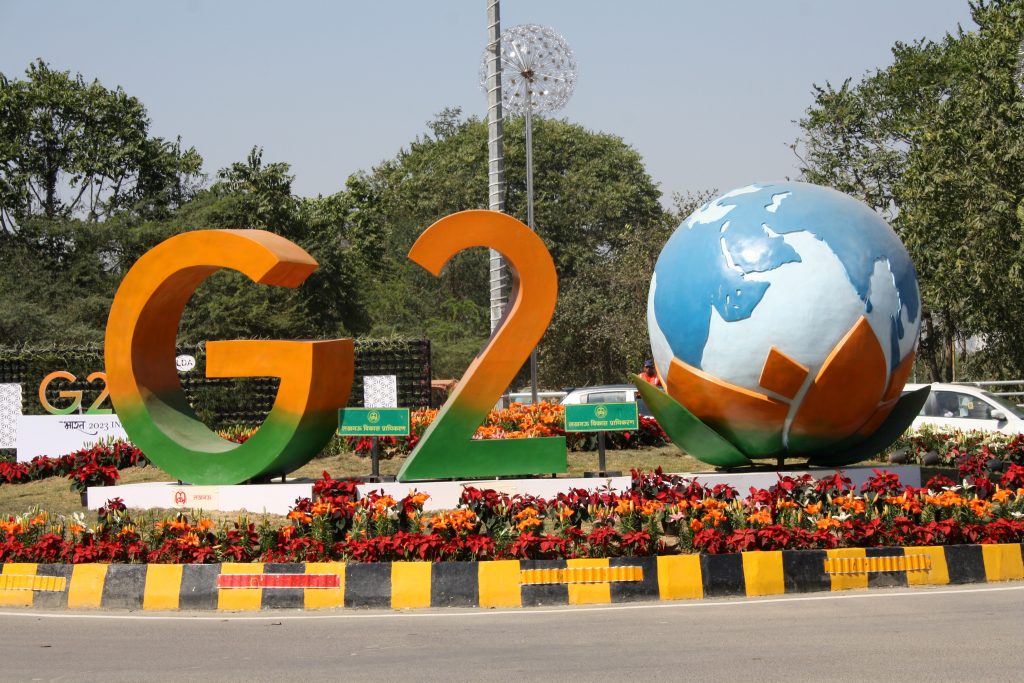
India’s presidency (December 2022–November 2023) unfolded against the backdrop of the Russia–Ukraine war, supply-chain disruptions, rising inflation, and growing polarization between major powers. Navigating these divisions, India positioned itself as a bridge-builder, foregrounding the concerns of the Global South. The New Delhi Leaders’ Declaration—adopted by consensus—reflected this balancing act, emphasizing sustainable development, reform of multilateral development banks, climate action, and digital public infrastructure. Notably, India championed the permanent inclusion of the African Union, strengthening the representational character of the forum.
Guided by the civilizational ethos of “One Earth, One Family, One Future,” India advanced a reformist agenda aimed at democratizing global governance. By prioritizing debt vulnerability in developing countries, energy transitions, and technology-driven inclusion, India reframed the G20 discourse beyond traditional power politics toward development-centric multilateralism. Its presidency demonstrated an attempt to recalibrate global governance toward multipolarity—where emerging economies assert agency rather than remain rule-takers.
Thus, India’s G20 leadership was not merely diplomatic stewardship but a strategic assertion of Global South solidarity, institutional reform, and accountable multilateralism in a transforming international order.
Global Governance in Transition: From Bretton Woods to the G20
The contemporary global governance system reflects a gradual shift from the rigid hierarchies of the International Monetary Fund and the World Bank toward more flexible, plurilateral forums capable of responding to complex interdependence. Scholars such as Robert Keohane argue that institutions reduce uncertainty and transaction costs in an anarchic system, while John Ikenberry highlights how liberal order institutions sustain cooperation through embedded rules. Yet, post–Cold War realities—marked by the rise of emerging economies and the relative decline of Western dominance—have exposed representational deficits in traditional institutions.
The 1997 Asian Financial Crisis revealed the inadequacy of G7-centric coordination, catalyzing the creation of the Group of Twenty (G20) in 1999. Conceived at the Cologne Summit of the Group of Eight, the G20 expanded decision-making beyond industrialized powers to include systemically important developing economies. Its elevation to Leaders’ level during the 2008 Global Financial Crisis marked a critical juncture, with the G20 recognized as the “premier forum for international economic cooperation.” Today, its members account for approximately 85% of global GDP, 75% of world trade, and two-thirds of the global population—indicating both systemic weight and representative breadth.
Unlike formal institutions, the G20 lacks a permanent secretariat, constitution, or enforcement mechanisms. As scholars of informal governance note, this flexibility allows rapid consensus-building but also limits institutional accountability. Nevertheless, its agenda has expanded beyond macroeconomic coordination to climate finance, digital transformation, debt restructuring, and sustainable development—reflecting the diffusion of global risks.
Institutional Evolution and Contemporary Relevance
Recent global disruptions—including the COVID-19 pandemic, sovereign debt crises in the Global South, and the Russia–Ukraine conflict—have reinforced the G20’s centrality. During the 2008 crisis, coordinated stimulus packages stabilized financial markets; similarly, in the post-pandemic period, the G20 advanced the Debt Service Suspension Initiative and Common Framework to assist vulnerable economies.
The forum’s growing engagement with climate governance aligns with the objectives of the Paris Agreement, particularly in mobilizing climate finance for developing countries. The permanent inclusion of the African Union in 2023 further strengthened its legitimacy and corrected long-standing representational imbalances.
Constructivist scholars emphasize that institutions shape norms as much as they coordinate policy. In this respect, the G20’s evolution signals a broader normative shift toward multipolarity and inclusive multilateralism. While challenges of fragmentation and geopolitical rivalry persist, the G20 represents an adaptive model of global governance—informal yet influential, flexible yet systemically indispensable in navigating twenty-first-century economic and developmental challenges.
From Westphalia to the United Nations: The Institutional Foundations of Global Governance
The evolution of global governance reflects a gradual transformation from balance-of-power diplomacy to institutionalized multilateralism. The 1648 Peace of Westphalia laid the normative foundation of sovereign equality and non-intervention, principles that continue to underpin international order. Yet early cooperation remained fragmented and largely bilateral, shaped by imperial hierarchies and strategic bargaining.
The 19th century marked a decisive shift toward structured multilateralism. The 1815 Congress of Vienna institutionalized collective security through great-power consultation, inaugurating the “Concert of Europe.” Functionalist cooperation expanded through bodies such as the International Committee of the Red Cross and the Universal Postal Union, illustrating what David Mitrany later conceptualized as functionalism—cooperation in technical areas to reduce conflict.
The failure of the League of Nations to prevent World War II exposed the limits of idealist multilateralism without enforcement mechanisms. Post-1945 reconstruction, particularly the Bretton Woods Conference, institutionalized economic governance through the International Monetary Fund and the World Bank. The creation of the United Nations consolidated security, development, and human rights under a universal framework. Scholars such as Hedley Bull describe this as the emergence of an “international society,” while Robert Keohane underscores how institutions facilitate cooperation under anarchy.
Multipolarity, Informal Governance, and the G20
The 21st century has introduced transnational threats—pandemics, climate change, cyber insecurity—that transcend state-centric governance. The COVID-19 crisis and intensifying geopolitical rivalries have stressed institutional capacity, while debt distress across the Global South and climate finance gaps expose persistent inequalities. Regional bodies like the European Union and the African Union illustrate the layering of governance beyond the global level.
Simultaneously, emerging economies demand greater voice, challenging Bretton Woods-era voting structures. The Group of Twenty represents an adaptive response—an informal yet influential forum accounting for most global GDP and population. As scholars of global governance such as Ian Bremmer argue, the contemporary system reflects “G-Zero” tendencies, where no single power dominates, necessitating flexible coalitions.
However, concerns persist regarding the G20’s informality, lack of binding authority, and limited representation of smaller states. Current debates on reforming multilateral development banks and expanding representation highlight the urgency of institutional recalibration. Global governance, therefore, is not static but evolutionary—moving toward multipolar, networked, and inclusive frameworks that must reconcile legitimacy, effectiveness, and equity in an era of systemic transition.
India and the G20: Strategic Leadership and Global Advocacy
India’s participation in the Group of Twenty (G20) illustrates its emergence as a major economic and diplomatic power that not only advances its own interests but also pushes for a more inclusive global governance framework. As the world’s fastest-growing large economy, India leverages G20 platforms to strengthen sustainable growth, enhance economic security, and advocate for the developmental priorities of the Global South. Economists like Raghuram Rajan and Harsha V. Singh note that India’s economic rise is reshaping global policy discussions, and its performance in world markets underscores this influence.
At the 2025 G20 Johannesburg Summit, Prime Minister Narendra Modi articulated a forward-looking agenda rooted in inclusive and sustainable development, proposing six major initiatives: a Global Traditional Knowledge Repository, a G20–Africa Skills Multiplier Initiative, a Global Healthcare Response Team, a joint effort against the drug–terror nexus, a Critical Minerals Circularity Initiative, and an Open Satellite Data Partnership aimed at health resilience, knowledge sharing, and resource security. These proposals reflect India’s effort to broaden the scope of G20 cooperation beyond macroeconomic issues to dimensions like health preparedness and technology governance.
India’s emphasis on equitable development and fair trade aligns with broader calls for reforming global trade governance to ensure that developing countries are not disadvantaged by protectionism or unequal standards. Through the G20, India has promoted transparent, rule-based trade frameworks that safeguard developmental space for emerging economies—even as global inflationary pressures and supply-chain vulnerabilities persist following the COVID-19 pandemic.
Recent G20 deliberations have also reinforced India’s push for sovereign debt treatments and climate finance mechanisms that address the needs of low-income countries, strengthening the G20 Common Framework for debt treatment.
In the past two months, India’s diplomatic engagements at the G20 have continued to emphasize solidarity, sustainability, and equity, with Prime Minister Modi participating in high-level discussions in South Africa and reinforcing cooperation on climate change, health governance, and digital inclusion—areas where India seeks a leadership role in shaping norms for a fairer global order. Overall, India’s G20 participation portrays it not only as a key economic actor but also as a mediator between developed and developing nations, advocating for balanced policies that enhance inclusive growth and strengthen multilateral cooperation.
India’s G20 Presidency: Developmental Multilateralism and Strategic Assertion
India’s presidency of the Group of Twenty in 2023 marked a substantive shift toward inclusive, development-centric multilateralism amid geopolitical fragmentation and economic uncertainty. Framed around the civilizational motto “One Earth, One Family, One Future,” India positioned itself as a bridge between advanced economies and the Global South. A major diplomatic achievement was the unanimous adoption of the New Delhi Leaders’ Declaration despite divisions over the Russia–Ukraine conflict—demonstrating India’s consensus-building capacity. The inclusion of the African Union as a permanent G20 member significantly enhanced the forum’s representational legitimacy. India also foregrounded sovereign debt vulnerabilities, climate finance gaps, and reform of multilateral development banks, aligning discussions with ongoing crises in Africa, South Asia, and small island states. Scholars such as Harsh V. Pant interpret this presidency as India’s assertion of “issue-based leadership” in a multipolar order, balancing strategic autonomy with normative advocacy.
Beyond declarations, India introduced concrete initiatives with long-term implications. The Green Development Pact reinforced commitments aligned with the Paris Agreement, while the LiFE (Lifestyle for Environment) movement emphasized sustainable consumption patterns. India institutionalized Digital Public Infrastructure (DPI) as a global public good, offering its Aadhaar-UPI model as a template for financial inclusion in developing countries. Strategic geo-economic announcements—including the Global Biofuel Alliance and the India-Middle East-Europe Economic Corridor—highlighted ambitions to reshape energy transitions and supply-chain connectivity, even as West Asian instability presents challenges to IMEC’s rollout. Additionally, initiatives on women-led development, disaster risk reduction, critical minerals, and pandemic preparedness broadened the G20 agenda beyond macroeconomics. Collectively, India’s presidency reflected an effort to democratize global governance, amplify Global South concerns, and reposition itself as a norm-shaping power in an increasingly fragmented international system.
African Union’s Inclusion in the G20: Structural Rebalancing and Emerging Agency
The permanent admission of the African Union into the Group of Twenty in September 2023 represents a structural recalibration of global economic governance. This decision addressed longstanding criticisms of representational asymmetry within major multilateral forums. Africa—home to over 1.4 billion people and central to global supply chains through its reserves of cobalt, lithium, and rare earth minerals—has become indispensable to discussions on energy transition and sustainable development. A current illustration of this relevance is the intensifying global competition over critical minerals for green technologies, where African states are negotiating more assertive terms with external partners. Additionally, ongoing sovereign debt restructuring negotiations involving African economies such as Zambia and Ghana highlight why African participation in G20 finance track deliberations is indispensable. India’s diplomatic leadership during its presidency played a catalytic role in securing consensus, reflecting a broader shift toward inclusive, multipolar governance.
However, the AU’s integration presents both opportunities and operational complexities. The Union must consolidate the diverse priorities of its 55 member states into coherent negotiating positions to exercise meaningful influence. At the same time, its presence strengthens Africa’s leverage in debates on climate finance implementation under the Paris Agreement, particularly amid ongoing global discussions on loss and damage funding mechanisms. Furthermore, renewed instability in regions such as the Sahel underscores the need for Africa’s voice in conversations on development-security linkages within the G20 framework. While broader membership may complicate consensus-building, the AU’s accession enhances the forum’s legitimacy, deepens South–South solidarity, and embeds African agency within the core of global macroeconomic governance. Ultimately, this development signals a transformative moment—shifting the G20 from elite economic coordination toward a more equitable and representative multilateral architecture.
Strategic Balancing and Contemporary Geopolitical Engagement
India’s presidency of the Group of Twenty illustrated a pragmatic strategy of multi-alignment—deepening ties with major powers while preserving strategic autonomy. Engagement with the United States intensified through cooperation on clean energy, semiconductor supply chains, and critical technologies under the broader Indo-Pacific framework. A recent example includes ongoing collaboration on critical and emerging technologies through the iCET framework, reflecting shared concerns over supply-chain resilience and technological security. Simultaneously, India revived trade negotiations with the European Union, with 2024–2025 ministerial rounds focusing on market access, digital trade norms, and sustainable development standards. Security coordination also advanced through the Quadrilateral Security Dialogue, where discussions increasingly center on maritime security and critical minerals—particularly relevant amid disruptions in Red Sea shipping routes that have affected global trade flows. These engagements demonstrate India’s ability to build flexible, issue-based coalitions in a fragmented global order.
Financial Reform, Debt Diplomacy, and Global South Advocacy
India leveraged the G20 platform to press for reform of the International Monetary Fund and multilateral development banks, advocating voice and quota revisions to reflect the economic weight of emerging economies. A current illustration of this agenda is the continued G20 deliberations on sovereign debt restructuring, especially in cases such as Zambia and Ghana, where coordination among creditors remains complex. India has emphasized responsible lending practices and faster implementation of the Common Framework to prevent prolonged fiscal distress in developing economies. Additionally, climate finance debates have intensified ahead of global climate negotiations, with India reiterating demands for predictable adaptation funding for vulnerable states under the Paris Agreement framework. Through these initiatives—combined with its earlier push for the inclusion of the African Union—India has positioned itself as a vocal advocate for equitable financial governance. While structural reforms remain politically contested, India’s diplomacy has reinforced momentum toward a more representative, development-oriented multilateral system.
Conclusion
India’s presidency of the Group of Twenty marked an important moment in the trajectory of contemporary multilateralism. The New Delhi Summit showed that consensus is still achievable despite deep geopolitical divisions, particularly over the Russia–Ukraine conflict. The unanimous adoption of the Leaders’ Declaration and the permanent inclusion of the African Union strengthened the forum’s representational legitimacy and underscored India’s role as a bridge between advanced economies and the Global South.
At the same time, the presidency revealed structural constraints within the G20. While commitments were made on climate finance, debt relief, and multilateral development bank reform, questions remain regarding the scale of financial mobilization and the speed of implementation. In a global context shaped by restrictive monetary policies, sovereign debt distress, and slowing economic growth, effective follow-through will determine whether the summit outcomes translate into tangible progress.
India’s leadership advanced a development-focused agenda that emphasized inclusivity, equity, and institutional reform. However, the long-term impact of its presidency will depend on sustained cooperation among successive G20 chairs—particularly within the India–Brazil–South Africa Troika—and on the collective political will to convert consensus into concrete, measurable outcomes for global economic stability and sustainable development.

About the Author
Khushbu Ahlawat is a research analyst with a strong academic background in International Relations and Political Science. She has undertaken research projects at Jawaharlal Nehru University, contributing to analytical work on international and regional security issues. Alongside her research experience, she has professional exposure to Human Resources, with involvement in talent acquisition and organizational operations. She holds a Master’s degree in International Relations from Christ University, Bangalore, and a Bachelor’s degree in Political Science from the University of Delhi.



