
By: Khushbu Ahlawat, Consulting Editor, GSDN
Introduction
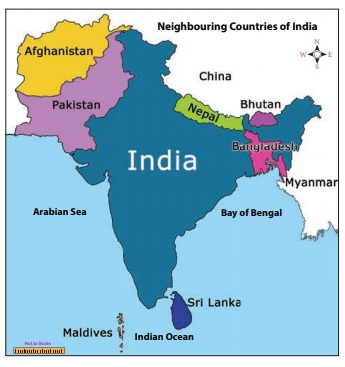
Aid diplomacy has emerged as a central instrument of contemporary statecraft, enabling states to project influence, cultivate goodwill, and secure strategic interests. In South Asia, India’s engagement with its eastern neighbours—Nepal, Bhutan, Bangladesh, and Myanmar—illustrates a calibrated blend of developmental partnership and geopolitical strategy. Rooted in deep historical, cultural, and economic linkages, India’s neighbourhood policy increasingly relies on development cooperation to promote regional stability and shared prosperity.
India’s aid diplomacy in the eastern sub-region is shaped by three interrelated imperatives. First, the stagnation of SAARC and persistent India–Pakistan tensions have shifted New Delhi’s focus from broad regionalism to sub-regional frameworks such as BBIN (Bangladesh–Bhutan–India–Nepal). These arrangements prioritize functional cooperation in connectivity, energy trade, and economic integration. Second, China’s expanding footprint through the Belt and Road Initiative (BRI) has intensified geopolitical competition, compelling India to offer an alternative development model emphasizing demand-driven assistance, capacity-building, and relatively fewer political conditionalities. Third, development cooperation serves India’s security interests by addressing transnational challenges including migration, energy insecurity, border instability, and climate vulnerabilities. While India projects itself as a development partner rather than a traditional donor, its aid diplomacy remains closely aligned with strategic concerns. Balancing geopolitical competition with genuine partnership constitutes the core challenge of India’s eastern engagement.
Patterns of Aid Allocation and Geostrategic Drivers
Between 2003 and 2023, India allocated approximately ₹57,884 crore in grants and assistance to Nepal, Bhutan, Bangladesh, and Myanmar. Bhutan received the largest share—nearly 75 percent—reflecting the depth of bilateral trust and institutionalized cooperation, particularly in hydropower development. Bangladesh received a comparatively smaller grant share but benefited from growing Lines of Credit and infrastructure investments, especially after 2013, when China expanded its economic footprint.
Bhutan’s dominant allocation underscores India’s long-standing strategic partnership. The India–Bhutan Trade and Transit Agreement (1972, renewed in 2016) institutionalized free trade and transit access. Hydropower cooperation—covering projects such as Chukha, Tala, Mangdechhu, and Punatsangchhu—anchors the economic relationship. Electricity exports to India constitute a major portion of Bhutan’s revenue, embedding deep economic interdependence.
In Nepal, aid allocations fluctuated alongside geopolitical developments. Following China’s increased engagement under BRI and President Xi Jinping’s 2019 visit to Kathmandu, India expanded assistance to reaffirm its role as Nepal’s primary development partner. Infrastructure, post-earthquake reconstruction, and cross-border transmission lines became focal points.
Myanmar’s aid trajectory corresponds closely with political transitions and border security concerns. Democratic reforms after 2011 saw expanded Indian cooperation, particularly in connectivity and border development. Following renewed instability after 2021, India adopted a pragmatic approach—maintaining development engagement to preserve border stability and safeguard strategic projects.
Overall, India’s aid allocation patterns reveal strategic responsiveness. Assistance increases during periods of heightened Chinese involvement or political instability, demonstrating that development cooperation functions as an instrument of geopolitical calibration.
BBIN and Sub-Regional Reorientation
The paralysis of SAARC since 2014 prompted India to pivot toward sub-regionalism. BBIN emerged as a pragmatic alternative, allowing functional cooperation in connectivity, transport, and energy without broader political deadlocks. A core objective is integrating India’s North Eastern Region (NER) with neighbouring economies. Historically isolated yet strategically vital, the NER connects India to Bangladesh, Bhutan, Myanmar, and China. Aid-funded infrastructure projects aim to transform the region into a gateway linking South Asia with Southeast Asia under the Act East Policy.
India–Bangladesh connectivity has advanced significantly. Restoration of pre-1965 rail links, operationalization of the Akhaura–Agartala railway, inland water transit routes, and the Maitri Setu bridge have reduced logistical barriers. Access to Chattogram and Mongla ports enables northeastern states to access sea routes, lowering transportation costs. The BBIN Motor Vehicles Agreement, operational among Bangladesh, India, and Nepal, facilitates cargo movement despite Bhutan’s pending ratification.
With Myanmar, projects such as the Kaladan Multi-Modal Transit Transport Project and the India–Myanmar–Thailand Trilateral Highway seek to link the NER with Southeast Asia. India has also funded border development initiatives in Chin State and the Naga Self-Administered Zone to manage insurgency risks and migration flows.
In Bhutan, hydropower cooperation, customs modernization, and proposed rail connectivity reinforce deep economic integration. India’s support for BIMSTEC complements BBIN by embedding sub-regionalism within a broader Bay of Bengal framework. Sub-regionalism thus functions as both developmental strategy and geopolitical instrument—enabling India to consolidate influence while counterbalancing external actors.
Energy Diplomacy and Regional Grid Integration
Energy cooperation represents one of the most consequential pillars of India’s eastern diplomacy. Cross-border power trade has evolved into a mechanism of structural interdependence linking Bangladesh, Nepal, Bhutan, and India within an emerging regional electricity market.
India–Bangladesh energy ties expanded following the 2013 Power Purchase Agreement. Bangladesh now imports over 1,000 MW from India through multiple interconnections. The Maitree Super Thermal Power Project at Rampal further institutionalized cooperation. Significantly, Bangladesh began importing Nepali hydropower via India’s grid—marking South Asia’s first trilateral electricity trade arrangement and a milestone for BBIN energy integration.
Nepal and Bhutan possess vast hydropower potential—approximately 40 GW and 23 GW respectively. India has invested heavily in transmission lines such as the Muzaffarpur–Dhalkebar corridor, enabling Nepal to export surplus monsoon electricity. By 2024–2025, Nepal increasingly utilized the Indian Energy Exchange for cross-border trade, generating valuable foreign exchange earnings. Bhutan’s hydropower cooperation remains the bedrock of bilateral relations. However, cost overruns and rising debt have sparked debates in Bhutan regarding economic dependence and financing models. India’s gradual shift from grant-based assistance to loan financing has introduced new sensitivities.
From India’s perspective, hydropower imports diversify renewable energy sources, support decarbonization goals, and reduce the need for politically contentious dams in its Northeast. Acting as a transmission hub enhances India’s centrality within the regional energy architecture. Nevertheless, climate change, glacial melt, and basin-level ecological concerns complicate hydropower geopolitics. Long-term sustainability will require equitable financial models and transparent water governance mechanisms.
Economic Integration and Digital Statecraft
India’s support for democratisation in its eastern neighbourhood reflects a blend of normative commitment and pragmatic security considerations. Democratic Peace Theory suggests that stable democracies are less likely to engage in conflict; however, India’s approach prioritizes stability over ideological promotion. In Nepal, India supported constitutional transitions and continues engagement amid coalition volatility. High-level exchanges in 2023–2025, cooperation on parliamentary training, and assistance in infrastructure and energy projects reflect India’s preference for institutional continuity despite frequent government changes in Kathmandu. In Bhutan, India assisted the 2008 democratic transition and continues institutional capacity-building, including digital governance cooperation and parliamentary exchanges following Bhutan’s 2023–2024 electoral cycle. Myanmar presents a complex case: after the 2021 military coup, India adopted a calibrated approach—advocating restoration of democracy while maintaining engagement to secure border stability, manage refugee inflows into Manipur and Mizoram, and protect connectivity projects such as the Kaladan corridor. Additionally, India has participated in ASEAN-led consultations on Myanmar and provided humanitarian assistance to affected populations, reflecting its dual-track policy of democratic advocacy and strategic engagement.
In Bangladesh, India emphasized constitutional continuity following the January 2024 general elections, reiterating support for democratic processes while deepening cooperation in connectivity, energy trade, and security coordination. The operationalization of cross-border railway links, expansion of power trade exceeding 1,000 MW, and collaboration on coastal shipping agreements underline the interlinkage between governance stability and economic integration. Counterterrorism collaboration and intelligence-sharing remain central, particularly given concerns over extremism and cross-border insurgent networks. India has also expanded election management training and capacity-building programs for officials from neighbouring countries under the Indian Technical and Economic Cooperation (ITEC) framework, alongside digital public goods cooperation such as the rollout of UPI-based payment connectivity and digital identity partnerships. Across the region, New Delhi increasingly links governance assistance with digital public infrastructure, e-governance platforms, and institutional modernization. India’s democratisation strategy thus reflects pragmatic liberalism—supporting representative institutions and governance reforms while simultaneously safeguarding strategic interests, border security, and regional stability in a fluid geopolitical environment.
Energy Geopolitics in the Bay of Bengal
The Bay of Bengal constitutes a critical maritime energy frontier. UNCLOS rulings in 2012 and 2014 resolved maritime delimitation disputes among Bangladesh, Myanmar, and India, reducing conflict risk and enabling offshore exploration. Bangladesh, confronting declining domestic gas reserves and rising LNG import costs after the global energy shocks triggered by the Ukraine conflict, has accelerated offshore bidding rounds and revised its Production Sharing Contracts (PSCs) to attract foreign investment in deep-water blocks. India, under its Open Acreage Licensing Policy (OALP), has expanded exploration activities along its eastern offshore basin, encouraging greater participation by domestic and international energy firms. Meanwhile, China’s operationalization of the Kyaukphyu deep-sea port and the China–Myanmar oil and gas pipelines linking the Bay of Bengal to Yunnan province has added a strategic dimension, reducing Beijing’s dependence on the Malacca Strait while strengthening its presence in the eastern Indian Ocean.
India’s response integrates maritime diplomacy, energy cooperation, and security initiatives under its SAGAR (Security and Growth for All in the Region) doctrine. Cooperation with Bangladesh includes the operationalization of the India–Bangladesh Friendship Pipeline, expanded cross-border electricity trade, and growing coordination on LNG supply and coastal shipping. India has also intensified naval exercises, coordinated patrols, and maritime domain awareness sharing with Bangladesh and Myanmar to safeguard offshore energy assets and sea lanes of communication. Through BIMSTEC, India promotes regional frameworks for coastal shipping, grid interconnectivity, and blue economy collaboration. Although territorial disputes have largely subsided, the Bay of Bengal continues to function as a theatre of economic rivalry and strategic balancing, where energy security, maritime governance, and great-power competition remain deeply intertwined.
Democratisation and Political Stability
India’s support for democratisation in its eastern neighbourhood reflects a blend of normative commitment and pragmatic security considerations. Democratic Peace Theory suggests that stable democracies are less likely to engage in conflict; however, India’s approach prioritizes stability over ideological promotion.
India’s support for democratisation in its eastern neighbourhood reflects a blend of normative commitment and pragmatic security considerations. Democratic Peace Theory suggests that stable democracies are less likely to engage in conflict; however, India’s approach prioritizes stability over ideological promotion. In Nepal, India supported constitutional transitions and continues engagement amid coalition volatility. High-level exchanges in 2023–2025, cooperation on parliamentary training, and assistance in infrastructure and energy projects reflect India’s preference for institutional continuity despite frequent government changes in Kathmandu. In Bhutan, India assisted the 2008 democratic transition and continues institutional capacity-building, including digital governance cooperation and parliamentary exchanges following Bhutan’s 2023–2024 electoral cycle. Myanmar presents a complex case: after the 2021 military coup, India adopted a calibrated approach—advocating restoration of democracy while maintaining engagement to secure border stability, manage refugee inflows into Manipur and Mizoram, and protect connectivity projects such as the Kaladan corridor.
In Bangladesh, India emphasized constitutional continuity following the January 2024 general elections, reiterating support for democratic processes while deepening cooperation in connectivity, energy trade, and security coordination. Counterterrorism collaboration and intelligence-sharing remain central, particularly given concerns over extremism and cross-border insurgent networks. India has also expanded election management training and capacity-building programs for officials from neighbouring countries under the Indian Technical and Economic Cooperation (ITEC) framework. Across the region, New Delhi increasingly links governance assistance with digital public infrastructure, e-governance platforms, and institutional modernization. India’s democratisation strategy thus reflects pragmatic liberalism—supporting representative institutions and governance reforms while simultaneously safeguarding strategic interests, border security, and regional stability in a fluid geopolitical environment.
Conclusion
India’s aid diplomacy in its eastern neighbourhood represents a nuanced strategy that integrates development cooperation with geopolitical pragmatism. Through infrastructure development, energy integration, digital financial systems, and sub-regional frameworks such as BBIN and BIMSTEC, India has repositioned itself as a central stabilizing actor in eastern South Asia. Aid allocation patterns demonstrate strategic responsiveness, particularly amid China’s expanding regional presence. Cross-border power trade and grid connectivity underscore India’s ambition to act as the energy hub of the sub-region. Meanwhile, economic integration through trade liberalization and Digital Public Infrastructure reflects evolving forms of economic statecraft.
Yet challenges remain. Bureaucratic delays, debt sustainability concerns, perceptions of asymmetry, climate vulnerabilities, and intensifying geopolitical competition complicate India’s neighbourhood policy. Sustaining credibility will require balancing strategic leadership with sensitivity to sovereignty and equitable partnership. As regional geopolitics grow increasingly complex in 2024–2025, India’s eastern aid diplomacy underscores a broader transformation: from traditional donor–recipient hierarchies toward structured interdependence. The long-term success of this model will depend on transparent governance, inclusive development, and India’s ability to harmonize strategic interests with the aspirations of its neighbours.

About the Author
Khushbu Ahlawat is a research analyst with a strong academic background in International Relations and Political Science. She has undertaken research projects at Jawaharlal Nehru University, contributing to analytical work on international and regional security issues. Alongside her research experience, she has professional exposure to Human Resources, with involvement in talent acquisition and organizational operations. She holds a Master’s degree in International Relations from Christ University, Bangalore, and a Bachelor’s degree in Political Science from the University of Delhi.
Author




Well articulated and an engaging read .