
By: Kumar Aryan, Research Analyst, GSDN
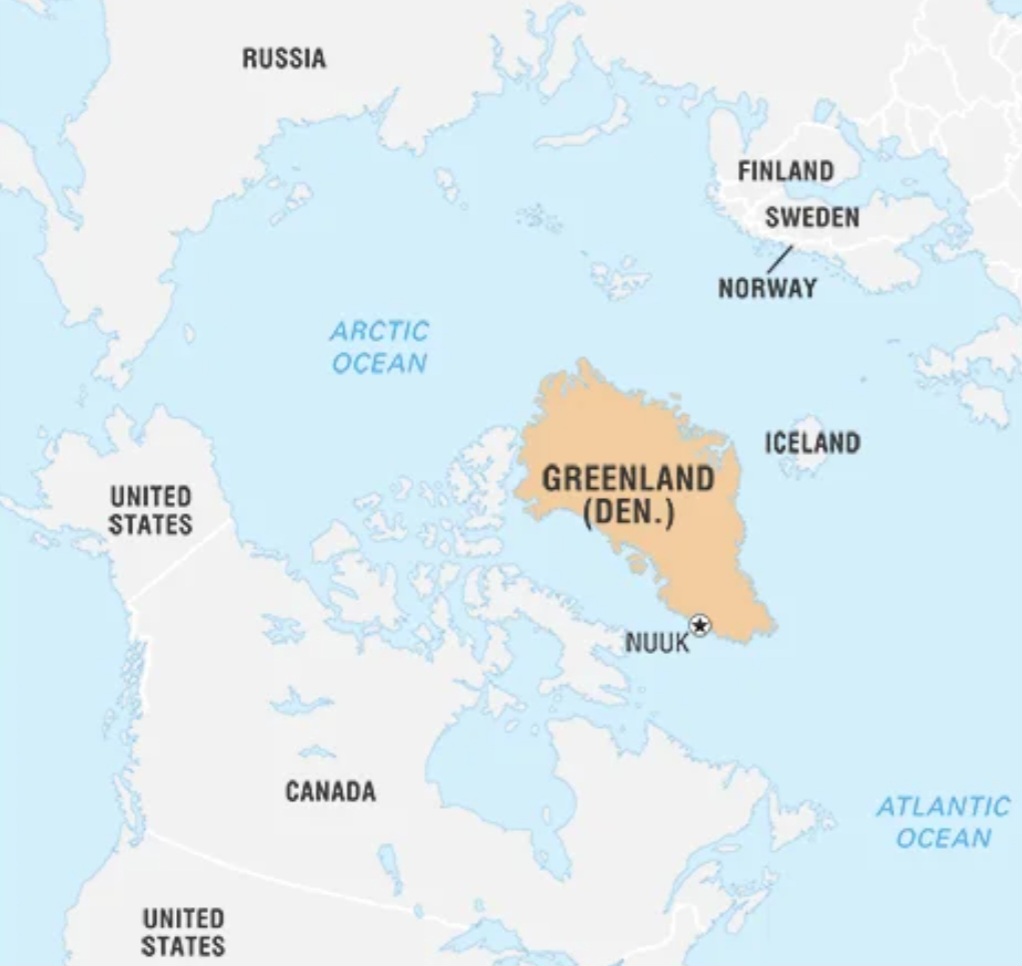
The early months of 2026 have witnessed a dramatic recalibration of United States foreign and strategic policy under the Trump administration’s reasserted hemispheric dominance framework. On January 3, 2026, the United States executed a large-scale military operation in Venezuela that resulted in the capture and exfiltration of President Nicolás Maduro, marking a significant escalation in American intervention in Latin America. Simultaneously, the Trump administration has pursued an aggressive diplomatic and strategic campaign to acquire or gain direct control of Greenland, an autonomous territory within the Kingdom of Denmark, signaling a new phase in great power competition in the Arctic region. These two contemporaneous initiatives, one demonstrating demonstrated military willingness and the other revealing emerging strategic priorities raise critical questions about American regional ambitions and the consistency of policy objectives. This article examines whether Greenland represents a subsequent target of American strategic expansion following the Venezuela precedent, analyzing the drivers, strategic rationale, geopolitical implications, and comparative dynamics between these two distinct but interconnected policy trajectories.
Venezuela: Strategic Rationale and Military Precedent
Background and Escalation Timeline
The United States has maintained sustained interest in Venezuela’s political trajectory since the rise of Hugo Chávez in 1999, but American pressure intensified dramatically under successive administrations beginning with George W. Bush through the Obama and Trump years. However, the 2025-2026 period witnessed a qualitative shift in American operational capacity and political resolve. Beginning in August 2025, the United States initiated a substantial military buildup in the southern Caribbean, deploying multiple naval assets and military personnel to forward positions across the region. By late December 2025, military operations had escalated beyond maritime interdiction to include land-based strikes, including strikes on a remote northern Venezuelan port allegedly used by criminal organizations for smuggling activities.
The military operation that unfolded on January 3, 2026, represented the culmination of months of strategic preparation. According to public reporting, the Central Intelligence Agency (CIA) had deployed personnel into Venezuelan territory months prior to establish surveillance networks, and specific operational planning for the capture of Maduro and his wife, Cilia Flores, was executed with substantial advance coordination. President Trump has indicated that additional military waves were contemplated but subsequently canceled following reported Venezuelan cooperation with American demands. The operation demonstrates several critical capabilities: sustained covert operational presence, real-time tactical execution against a recognized sovereign state’s leadership, and political willingness to employ military force against Latin American governments opposed to American interests.
Strategic Drivers: Energy, Drugs, and Hemispheric Control
Venezuela possesses the world’s largest proven oil reserves, estimated at approximately 305 billion barrels as of 2023, substantially exceeding Saudi Arabia’s confirmed reserves. While Venezuela’s oil production capacity had collapsed from approximately 2.8 million barrels per day (b/d) in 1997 to roughly 400,000-500,000 b/d by 2025 due to decades of infrastructure underinvestment and sanctions pressure, the strategic value of controlling these reserves remained central to American calculations. American energy security interests, coupled with desires to ensure Western Hemisphere energy independence and to prevent rival powers such as China from expanding influence through energy relationships, constituted significant motivating factors.
Beyond hydrocarbon resources, American officials articulated narcotics trafficking concerns as a critical justification for intervention. The Trump administration designated Cartel de los Soles as a foreign terrorist organization in early January 2026, accusing Maduro of directing this criminal enterprise. Trafficking in cocaine and synthetic drugs from Venezuela through Caribbean corridors into North American markets affects domestic security policy and public health outcomes. However, this framing obscured the broader geopolitical objective: preventing anti-American governments from consolidating regional influence and preventing rival powers, particularly China and Russia, from expanding military and political presence in America’s traditional sphere of influence.
The “America First” Doctrine and the Monroe Doctrine Corollary
The Trump administration formalized a comprehensive strategic doctrine on January 20, 2025, through the “America First Policy Directive” to the Secretary of State. This directive explicitly ordered that “from this day forward, the foreign policy of the United States shall champion core American interests and always put America and American citizens first”. This language signaled a departure from multilateral institutional frameworks and post-Cold War consensus diplomacy toward a more transactional, interest-based approach to statecraft.
The 2025 National Security Strategy, published by the White House, made explicit reference to establishing a “Trump Corollary” to the Monroe Doctrine and signaled intentions to “assert and enforce” American dominance throughout the Western Hemisphere and beyond. The Monroe Doctrine, originally articulated by President James Monroe in 1823, opposed European colonization and political interference in the Americas. The Trump Corollary extends this framework to oppose any non-American great power influence and to position the United States as the sole arbiter of hemispheric affairs. Under this doctrine, the Venezuela operation represented enforcement of this hemispheric primacy, eliminating a government deemed ideologically hostile to American interests and geopolitically aligned with rival powers.
Greenland: Strategic Rationale and Arctic Imperative
Geographic, Mineral, and Strategic Significance
Greenland occupies a singular position in contemporary Arctic geopolitics. The island, covering approximately 2.166 million square kilometers (836,000 square miles) of territory, sits at the intersection of European, North American, and Arctic maritime domains. With a current population of approximately 56,000 inhabitants, Greenland qualifies as one of the world’s least densely populated territories, yet its geographic position carries outsized geopolitical significance.
The melting Arctic ice, accelerated by climate change, has fundamentally altered the strategic calculus surrounding Greenland. Three major Arctic shipping routes have either emerged or become increasingly viable: the Northwest Passage along Canada’s northern Arctic coast, the Northern Sea Route (NSR) along Russia’s Arctic coast, and the prospective Transpolar Sea Route crossing the central Arctic Ocean. Greenland’s position along these emerging trade corridors provides strategic leverage over future global commerce and international maritime transport. The island also lies adjacent to the Greenland-Iceland-United Kingdom gap, a critical maritime chokepoint through which Russian and Chinese naval vessels must transit to reach North Atlantic operations areas.
Beyond maritime geography, Greenland possesses substantial mineral wealth previously inaccessible beneath layers of permanent ice and permafrost. A joint geological survey conducted by Denmark and Greenland in 2023 identified significant deposits of critical raw materials essential to modern industrial economies and advanced technology sectors. These resources include rare-earth elements (REEs), graphite, platinum-group metals, titanium, and other strategic minerals. The global energy transition toward renewable electricity generation, electrified transportation, and advanced defense systems has dramatically increased demand for these materials, particularly rare-earth elements used in wind turbines, electric vehicle batteries, permanent magnets, and military radar systems. As climate change continues melting Greenland’s ice sheet, extracting these resources becomes progressively more economically feasible.
American Strategic Interests: Military, Economic, and Technological
President Trump has repeatedly articulated national security justifications for acquiring Greenland, emphasizing military defensive capabilities as the primary rationale. The Trump administration highlighted the strategic imperative of preventing rival powers, specifically China and Russia, from establishing military or political influence over Arctic regions and resources. Trump stated that “Greenland lies along two potential Arctic shipping routes: the Northwest Passage and the Transpolar Sea Route. With climate change making these routes more feasible, commercial interests also enhance the national security significance of the island”.
The United States maintains limited military infrastructure in Greenland. Currently, the U.S. military operates Thule Air Base in northwestern Greenland, established during the Cold War era and utilized for missile early warning, air defense, and space operations. However, full American control of Greenland could enable substantial expansion of this footprint, potentially accommodating the so-called “Golden Dome” missile defense system, a centerpiece of the Trump administration’s strategic defense initiative announced on January 20, 2025. This system, designed to provide comprehensive missile defense protection for North American territory, would benefit operationally from forward-positioned sensors and interceptors in Greenland’s strategic Arctic location.
From a resource security perspective, controlling Greenland’s rare-earth deposits would provide the United States with diversified sourcing of critical minerals currently concentrated in geopolitically sensitive supply chains. China dominates global rare-earth element processing and refining, controlling approximately 85 percent of global processing capacity. The majority of rare-earth mining occurs in China, Myanmar, and Vietnam. Acquiring or controlling Greenland’s mineral wealth would reduce American technological and industrial dependence on Chinese supply chains and provide strategic leverage in technology competition and potential future conflict scenarios.
Vice President JD Vance visited Greenland in March 2025 and articulated the American strategic position that “it was the policy of the United States” to seek advantageous changes regarding Greenland’s governance structure. Vance’s statement, while acknowledging that Greenlanders themselves should determine their future, signaled explicit American preference for political transitions that would facilitate American interests.
Acquisition Strategy: Purchase, Coercion, and Military Options
The Trump administration has explored multiple strategic pathways toward acquiring Greenland. Initially, the administration proposed a direct purchase arrangement, suggesting financial compensation to Denmark in exchange for sovereignty transfer over Greenland. Estimates of the potential purchase price have ranged up to US$ 700 billion according to various media reports, though no official American or Danish estimates have been released. This figure, while extraordinary, situates Greenland’s perceived strategic value within comparable international agreements regarding territorial acquisition, military bases, and resource rights.
When Danish and Greenlandic officials categorically rejected the purchase proposal, the Trump administration escalated its strategic messaging. On January 15, 2026, following high-level White House meetings between U.S. Secretary of State Marco Rubio, Vice President JD Vance, and Danish Foreign Minister Lars Løkke Rasmussen, the American position hardened. White House Press Secretary Karoline Leavitt stated that “the President has made his priority quite clear. He wants the United States to acquire Greenland. He thinks it is in our best national security to do that”. When questioned about potential military action, Leavitt did not rule out such options, stating that “I don’t think troops in Europe impact the president’s decision-making process, nor does it impact his goal of the acquisition of Greenland at all”.
Trump himself signaled this escalatory trajectory when he stated that anything short of American acquisition would be “unacceptable” and remarked that the United States would pursue this objective “one way or the other”. In public statements, Trump suggested that military force was a potential instrument to achieve this objective, stating “we need Greenland from the standpoint of national security,” implying that this necessity overrode conventional diplomatic constraints.
Comparative Analysis: Venezuela and Greenland as Linked Strategic Initiatives
Temporal Sequencing and Policy Signaling
The temporal proximity of the Venezuela military operation (January 3, 2026) and the intensified Greenland acquisition campaign (January 13-16, 2026) was not coincidental. The successful execution of the Venezuela operation, which involved projecting military power into a sovereign nation’s territory without comprehensive international authorization and executing the removal of a sitting president, demonstrated both American operational capability and political willingness to employ military instruments for strategic objectives. This demonstration preceded the Greenland campaign by mere days, creating a powerful signal regarding American strategic intent and instrumental capacity.
Trump’s public statements directly linked these initiatives as manifestations of a unified strategic doctrine. Referencing the Venezuela operation in January 2026, Trump remarked that “the day after US forces snatched Maduro from his home,” he reiterated that the U.S. requires Greenland “from the standpoint of national security”. This sequential articulation suggests that Trump conceptualized these initiatives as part of a comprehensive American strategic repositioning in its traditional spheres of influence and newly prioritized regions.
Doctrine of Hemispheric and Arctic Dominance
Both the Venezuela intervention and the Greenland acquisition campaign operate within the framework of the “Trump Corollary” to the Monroe Doctrine formalized in January 2025. The Venezuela operation enforced the principle that anti-American governments cannot persist in the Western Hemisphere. The Greenland campaign similarly enforces the principle that American security interests in strategically vital regions override conventional international law and alliances.
However, the Greenland case introduces significant complications absent in the Venezuela precedent. Venezuela was fundamentally isolated internationally following years of humanitarian crisis, sanctions, and regime delegitimization. Greenland, by contrast, remains within the Danish kingdom, and Denmark is a founding member of the North Atlantic Treaty Organization (NATO), America’s primary military alliance. Pursuing Greenland through military means would directly contradict Article 5 collective defense obligations and could precipitate NATO alliance fragmentation.
Strategic Asset Hierarchy: Resources, Geography, and Power Projection
Venezuela and Greenland represent distinct but complementary resource and strategic assets within Trump’s hemispheric dominance framework. Venezuela offers energy security through proven oil reserves, albeit currently underdeveloped and requiring substantial capital investment for production recovery. Venezuela also provides geographic control over Caribbean maritime corridors and counter-narcotics leverage. However, Venezuela’s primary value lies in negative control, preventing rival powers from consolidating influence rather than positive resource acquisition or power projection capability.
Greenland, by contrast, offers both resource acquisition (critical minerals) and forward power projection capabilities (Arctic military infrastructure, missile defense, Arctic shipping route control). Greenland provides access to resources essential to American technological and industrial competitiveness and positions American military forces in territories adjacent to both Russian and Chinese expanding Arctic presence. From this perspective, Greenland represents a higher strategic tier asset than Venezuela, strategically superior in technological and industrial importance, though requiring substantially greater political and diplomatic capital to acquire.
The Precedent Question: Does Venezuela Enable Greenland?
A critical analytical question concerns the causal relationship between the Venezuela operation and the Greenland campaign. The Venezuela precedent demonstrates American willingness to employ military force against sovereign nations to achieve strategic objectives. However, this precedent does not automatically translate to NATO member territory or allied nations.
The more significant mechanism linking these initiatives involves signaling American strategic intent and demonstrating capability credibly. By executing the Venezuela operation with swift effectiveness, Trump administration officials conveyed to international audiences that American military capacity and political will to employ it had not atrophied despite decades of inconclusive military engagements in Afghanistan, Iraq, and Syria. This demonstration enhanced the credibility of American threats regarding Greenland, suggesting that Trump officials were not merely rhetorical in threatening military options.
Denmark responded to this signaling environment by mobilizing both national and NATO allied resources to strengthen Greenland’s defense posture. Beginning in January 2026, Denmark announced substantial increases in military expenditures for Greenland, including deployment of fighter jets, naval vessels, and enhanced air defense systems. NATO allies including Germany, France, Sweden, and Norway confirmed participation in joint military exercises with Denmark in Greenland, specifically titled “Operation Arctic Endurance,” designed to demonstrate collective defense commitment and raise the costs of any American military attempt to acquire the territory.
Constraints and Complications: Why Greenland Differs from Venezuela
Alliance Structures and Article 5 Dynamics
The most fundamental distinction between the Venezuela and Greenland cases involves alliance dynamics. Venezuela has declined to NATO membership and occupies no special position within American alliance structures. Greenland, conversely, exists within Denmark’s territory, and Denmark holds full NATO membership status. An American military operation against Greenland would trigger NATO Article 5 provisions regarding collective defense, potentially forcing NATO allies to choose between alliance obligations and American security demands.
Atlantic Council Northern Europe Director Anna Wieslander articulated this strategic dilemma bluntly: “Should the darkest hour come and the United States uses military force to annex Greenland, the essence of Article 5 and collective defense within NATO would lose its meaning”. This statement captures the fundamental incompatibility between pursuing Greenland through military means and maintaining NATO cohesion. American strategists, aware of this constraint, have indicated preference for diplomatic compromise over military confrontation, though without entirely foreclosing military options.
Greenlandic Self-Determination and Democratic Opposition
Popular opposition to American acquisition of Greenland is overwhelming and constitutes a significant political-psychological constraint on American action. Polling conducted by Reuters in January 2026 indicated that approximately 85 percent of Greenlanders oppose American control over their territory. While this opposition has not prevented American strategic initiatives in other contexts, the democratic legitimacy of this opposition creates political costs within democratic discourse and alliance politics that distinguish the Greenland case from Venezuela, where popular opinion had already been extensively mobilized against the Maduro government.
Economic Negotiation Pathway: The Working Group Compromise
Rather than pursuing military options immediately, the Trump administration agreed to establish a working group with Denmark and Greenland to explore potential arrangements short of full American acquisition. Danish Foreign Minister Rasmussen indicated that “both Denmark and Greenland are open to the idea of the United States establishing additional military bases on the island, but he stressed that there are certain ‘red lines’ that Washington must not cross”. This negotiation framework suggests recognition by American officials that military options carry substantial costs that might be mitigated through creative arrangements regarding military cooperation, resource access, and enhanced strategic partnership.
Strategic Implications and Future Trajectory
Arctic Great Power Competition and Chinese and Russian Responses
The American focus on Greenland acquisition occurs within the broader context of intensifying Arctic competition between the United States, Russia, and China. Russia has substantially expanded Arctic military infrastructure and exercises Arctic capabilities with increasing sophistication. China, despite lacking territorial Arctic claims, has pursued Arctic resource agreements, shipping route participation, and technological investments positioning it as an “Arctic stakeholder”. The Trump administration’s explicit prioritization of Arctic dominance through Greenland acquisition represents a direct American response to rival power expansion in this strategically vital region.
Implications for NATO Cohesion and European Security Architecture
The Greenland dispute has strained American relationships with European NATO allies, particularly Denmark, but also with France, Germany, Sweden, and Norway, which have publicly demonstrated support for Denmark and Greenland through “Operation Arctic Endurance” and other coordinated responses. The Trump administration’s willingness to threaten military action against NATO members over territorial acquisition challenges fundamental assumptions regarding alliance solidarity and collective security commitments.
This dynamic creates potential bifurcation within NATO, with American strategic focus prioritizing Arctic competition and hemispheric dominance while European allies prioritize Atlantic security and preservation of alliance institutional structures. Resolving this tension will likely require significant diplomatic negotiation and possible restructuring of alliance burden-sharing arrangements and strategic priorities.
Precedent Implications for International Law and Territorial Acquisition
The simultaneous prosecution of the Venezuela operation and the Greenland acquisition campaign raises precedent questions regarding international legal norms and territorial acquisition. The Venezuela operation involved military intervention against a sovereign nation without United Nations Security Council authorization or formal international legal justification beyond American national security claims. While regime change operations have occurred throughout contemporary international history, the explicit American willingness to articulate this objective and to execute it through military means represents a departure from post-World War II diplomatic norms emphasizing formal international legal authorization.
The Greenland campaign, if pursued through military means, would represent the first instance of a great power attempting to forcibly acquire territory from an alliance partner since World War II. Such a precedent, if established through successful American action, could fundamentally alter international law regarding territorial integrity and alliance obligations. Conversely, if this attempt fails, it may strengthen norms regarding territorial inviolability and collective defense principles.
Conclusion
Greenland does appear to represent the next item on the American strategic agenda following the Venezuela precedent, but not as an automatic extension of the same strategic logic. Rather, Venezuela and Greenland constitute linked manifestations of a broader Trump administration doctrine emphasizing American hemispheric and Arctic dominance, military capability demonstration, and reassertion of American power in traditionally subordinate regions.
The Venezuela operation demonstrated American military capacity and political will to employ force against sovereign governments deemed contrary to American interests. This capability demonstration enhanced the credibility of American threats regarding Greenland, though the strategic logic differed substantially between these initiatives. Venezuela represented enforcement of negative control, preventing rival powers from consolidating influence in America’s traditional sphere of influence. Greenland represents pursuit of positive control, acquiring critical strategic assets including military positioning, Arctic shipping route influence, and rare-earth mineral resources essential to technological and industrial competitiveness.
However, significant constraints distinguish the Greenland case from Venezuela. NATO alliance structures, article 5 collective defense obligations, overwhelming Greenlandic democratic opposition to American acquisition, and European allied mobilization in response to American threats create substantially higher political, military, and diplomatic costs for American acquisition of Greenland than those incurred in the Venezuela operation.
The trajectory of American Greenland policy will likely involve sustained diplomatic pressure coupled with incremental military expansion, resource agreements, and strategic partnerships falling short of full territorial acquisition. However, the Trump administration has explicitly refused to foreclose military options, suggesting that escalation remains possible should diplomatic and economic negotiations fail to achieve American strategic objectives.
The global strategic system continues adjusting to American strategic repositioning. The outcome of the Venezuela and Greenland cases will substantially influence how rival powers perceive American strategic resolve, constrain or enable future American interventions in contested regions, and shape international legal norms regarding territorial acquisition, military intervention, and alliance solidarity in the twenty-first century geopolitical environment.

About the Author
Kumar Aryan is an analytical and results-oriented postgraduate from Symbiosis School of International Studies (SIU) with a Master’s in International Relations, Global Security, and International Business Strategy. He possesses a strong understanding of geopolitics and economics, expertise in research and data-driven strategy, and proven leadership in team management and is experienced in market intelligence, data analysis, and cross-cultural engagement.



