
By: Jaiwant Singh Jhala, Research Analyst, GSDN
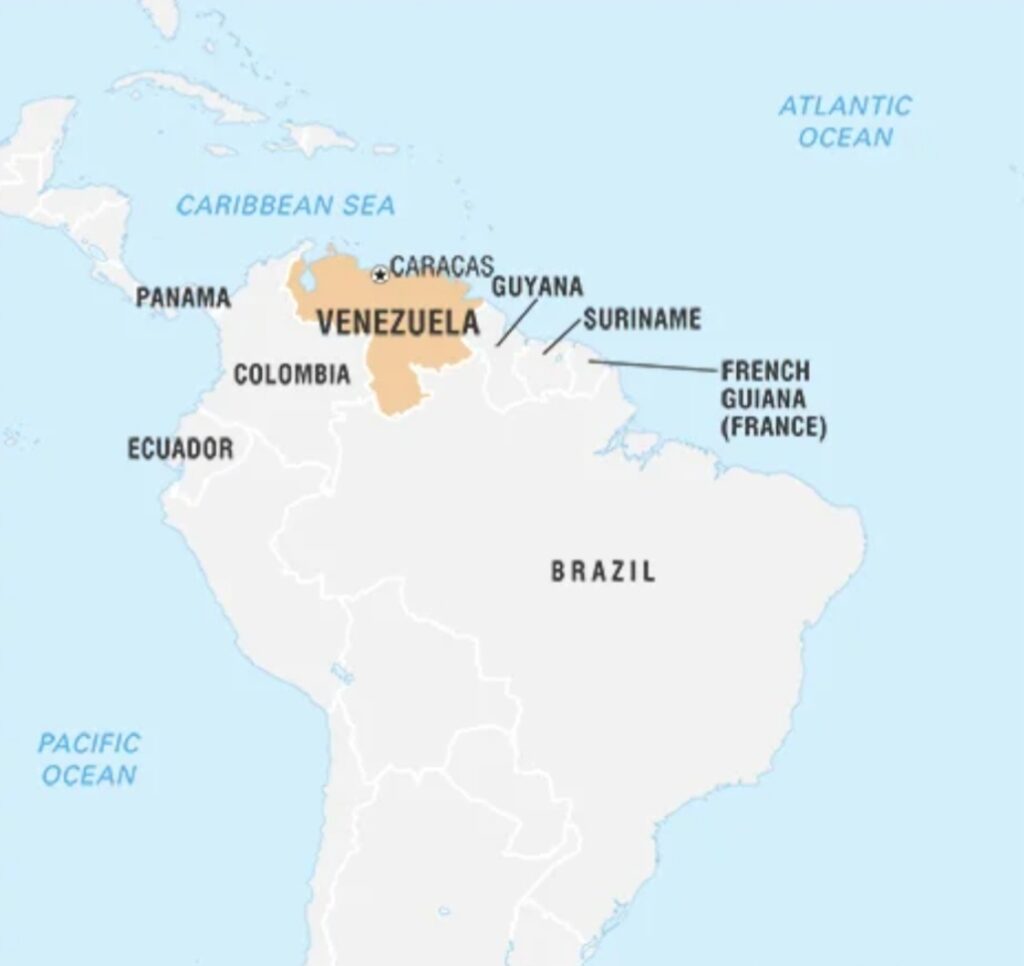
Tensions between the United States and Venezuela intensified significantly during Trump’s second presidency. Prior to the January operation, the US had imposed escalating sanctions targeting Venezuelan oil exports and financial flows, arguing that Caracas’ revenue streams funded drug trafficking, corruption, and authoritarian governance. These sanctions were paired with naval deployments in the Caribbean and repeated seizures of Venezuelan-linked oil tankers, part of a broader strategy to strangle the Venezuelan economy and curb what the US termed illicit maritime trade. From September 2025, US military forces began direct strikes on maritime vessels alleged to be involved in drug trafficking. These operations, which the administration claimed were necessary to stop narcotics shipments to the US, resulted in significant loss of life and sparked controversy over their legality. Chavez-era militia mobilization and formal condemnation by the Venezuelan government underscored the escalating confrontation. The situation reached a climax with the January raid that ousted Maduro’s government, an act the US portrayed as both a law-enforcement mission and a strategic intervention.
On January 3, 2026, the United States launched a dramatic military operation in Venezuela. US forces struck strategic targets in Caracas and elsewhere, ultimately capturing Venezuelan President Nicolás Maduro and his wife, Cilia Flores, and flying them out of the country to face US legal charges. The Trump administration justified this unprecedented action as part of a campaign against ‘narco-terrorism’ and criminal networks, while also framing it as a move to liberate Venezuela from what it termed an illegitimate and corrupt regime. The operation, titled Operation Absolute Resolve, marks one of the most significant US military incursions in Latin America since the invasion of Panama in 1989. The repercussions of this intervention extend far beyond Venezuela’s borders. From legal and ethical challenges to geopolitical realignments and strains on international norms, the US action has deep and complex implications for the current global order.
One of the most immediate and widely discussed implications of the US operation is its impact on international law, especially the principles governing sovereignty and the use of force. The UN Charter prohibits the use of force against the territorial integrity or political independence of any state except in self-defense or when authorized by the UN Security Council. Critics argue that the US operation violated these foundational norms, raising accusations of a ‘crime of aggression’ at emergency UN Security Council meetings. While the US administration has defended the operation as a legitimate effort to enforce indictments and protect US national security, legal scholars and diplomats question whether such justifications hold under international law, particularly when action is taken without UN endorsement or broad international consensus.
This controversy fuels a dangerous precedent, if great powers can unilaterally justify military intervention based on broad or contested criteria, the international rule-based system risks erosion. Observers warn that undermining rules against unilateral force makes other conflicts, whether in Europe, the Middle East or the Indo-Pacific, more volatile, as states feel emboldened to set their own rules of engagement. The US intervention has reverberated across global geopolitics. Countries long skeptical of US hegemony have condemned the operation, framing it as blatant aggression. Nations such as China, Russia, Cuba, Brazil, and others called the attack a violation of international norms and a threat to regional stability. For Russia and China, in particular, the US incursion presents strategic fodder.
Both powers have longstanding alliances with Venezuela, particularly in energy and military cooperation, and the US actions give them rhetorical leverage to highlight what they view as Western interventionism. Some analysts argue that this dynamic could indirectly embolden Russia’s own assertive strategies elsewhere, including in Ukraine and against NATO (North Atlantic Treaty Organization) interests, suggesting a broader weakening of US moral authority to champion peace and stability. Meanwhile, countries in Latin America are split, with some neighboring democracies expressing alarm at the precedent of forceful regime change, and others welcoming the collapse of Maduro’s regime as a potential stabilizing turn. Still, the risk of regional polarization and potential insurgency by pro-Maduro elements poses long-term security challenges. The decision to carry out a major military operation without explicit congressional authorization has sparked heated debate within the United States itself.
The US Senate advanced a War Powers Resolution aimed at restricting further unilateral military action by the president, citing constitutional requirements that Congress authorize war. This legislative push, crossing party lines, reflects deep institutional unease over executive overreach in foreign military policy. Trump’s rejection of such constraints as unconstitutional underscores a broader struggle within US governance over the balance of war powers, a struggle that could have lasting effects on how America engages militarily abroad, potentially reshaping the executive branch’s latitude in foreign interventions. At the core of Venezuela’s strategic importance lies its oil reserves, the largest proven reserves in the world, and broader natural resource wealth.
By seizing control of Venezuelan oil infrastructure and redirecting production, the US potentially alters global energy markets. While Venezuela’s output represents a small percentage of global oil production, its reintegration into markets under US influence could shift supply dynamics and reduce reliance of certain countries on Russian or Iranian energy. However, this strategy carries risks, including market volatility and resistance from state actors seeking alternative partnerships. Furthermore, demands from the US that Venezuelan authorities sever ties with China, Russia, Iran, and Cuba in exchange for resuming oil production add a geopolitical layer to what might otherwise have been an economic transaction. The military operation and subsequent power vacuum in Venezuela raise pressing humanitarian concerns. Venezuela already suffered years of economic hardship, political polarization, and mass migration prior to the intervention.
The immediate aftermath, including civilian casualties during strikes in and around Caracas, illuminates the high human cost of military interventions. Moreover, if Venezuelan society fragments along ideological and regional lines, the potential for sustained conflict or insurgency could create prolonged instability. This, in turn, could trigger new waves of displacement across Latin America, placing additional pressure on neighboring states. One of the most profound long-term consequences of the Venezuela intervention is its impact on the global rules-based order, the network of treaties, norms, and institutions designed to regulate international conduct and prevent unilateral force. The UN Charter, diplomatic immunity, and the sanctity of state sovereignty are foundational pillars of that system. By bypassing these frameworks, powerful states signal that force can be used outside established rules when it suits their interests. This has serious implications not only for weaker states, but also for future crises, whether in the South China Sea, the Indo-Pacific, Eastern Europe, or the Middle East, where interpretations of international law will increasingly be contested.
President Trump’s intervention in Venezuela fundamentally challenges longstanding assumptions about how global power operates in the 21st century. Beyond Latin America, the operation reverberates through international law, US constitutional debates, geopolitical alignments, energy markets, and regional stability. Whether this chapter becomes a harbinger of renewed great-power competition, a recalibration of US foreign policy, or a catalyst for reform in international institutions remains to be seen.
What is clear is that unilateral military interventions by major powers, particularly without broad international support, reshape the global order not just in the immediate theater of conflict, but in the norms that govern global affairs. Such actions test the resilience of the rules-based system that many nations have relied upon for decades, bringing into question whether that system, or something new, will prevail in the decades ahead.




Excellent work! Looking forward to future posts.