
By: Aasi Ansari, Research Analyst, GSDN
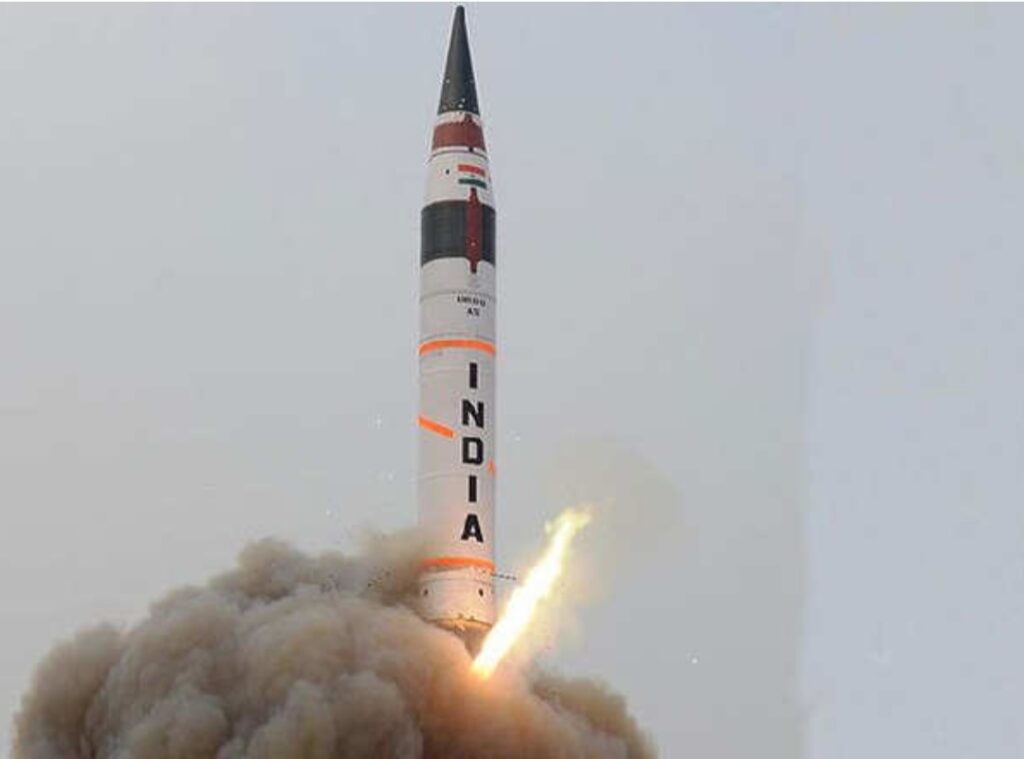
The rise of nuclear competition in the twenty-first century represents one of the major challenges to international security. Unlike the Cold War era, which was largely defined by the bipolar rivalry between the United States and the Soviet Union, today’s nuclear landscape is characterized by multiple actors, advanced technologies, and weakened governance structures. The erosion of key arms control treaties, coupled with modernization programs and shifting geopolitical rivalries, has created conditions conducive to a renewed nuclear arms race. Major powers such as the United States, Russia, and China are expanding or modernizing their arsenals, while regional actors including North Korea, India, Pakistan, and Israel continue to pursue nuclear capabilities, further destabilizing global security. This complex environment underscores the urgent need to reassess the effectiveness of existing non-proliferation regimes and to explore new mechanisms for arms control, diplomacy, and confidence-building among rival states.
Rise of Nuclear Arsenal
Russia and the United States together hold nearly 90 percent of the world’s nuclear weapons, and while their arsenals remained relatively stable until 2024, recent developments suggest both are preparing to restart missile development programs. With the New START Treaty set to expire in 2026, the absence of a new agreement could trigger further expansion of their stockpiles. China, meanwhile, has at least 600 warheads and is projected to reach 1,000 by 2030, though this will still be about one third of each of the current Russian and US nuclear stockpiles. Korea continues to prioritize its nuclear program, maintaining around 50 warheads with material for dozens more, while Israel’s covert program is believed to be advancing, highlighted by a 2024 missile propulsion test linked to its Jericho system. In South Asia, India and Pakistan—both nuclear-armed and locked in hostile relations—are actively modernizing their missile programs, making the region a persistent flashpoint. The United Kingdom and France have not expanded their arsenals in 2024, but reports suggest future growth is likely. Collectively, these trends point to a dangerous global shift toward more sophisticated and diversified nuclear capabilities, eroding past arms control progress and heightening risks to international security.
Factors Leading to Renewed Global Nuclear arms race
There are multiple factors leading to renewed global arms race. For instance, technological advancements, erosion of arms control, expirations of treaties, global Threat rising and geopolitical motivation.
One of the major critical factors necessitating a recalculation of the global nuclear arms race is the erosion and expiration of arms control agreements and treaties. International accords have been repeatedly violated in the context of modern conflicts, undermining their credibility and effectiveness. The Treaty on the Non-Proliferation of Nuclear Weapons (NPT), once considered the cornerstone of nuclear governance, now faces significant credibility challenges due to perceived inequities between nuclear and non-nuclear states. The weakening of the Comprehensive Nuclear-Test-Ban Treaty (CTBT) further illustrates the fragility of the arms control regime.
The New Strategic Arms Reduction Treaty (New START) is set to expire in February 2026, and its future remains uncertain. Similarly, the Joint Comprehensive Plan of Action (JCPOA), signed in 2015, has been wavering since the United States’ withdrawal in 2018 under President Donald Trump. Efforts to restore the agreement faltered in September 2022 amid indirect negotiations, although President Joe Biden has indicated that the United States remains open to re-engagement, should Iran demonstrate compliance. Compounding these challenges, France, Germany, and the United Kingdom accused Iran of violating United Nations Security Council Resolution 2231 in 2023 by supplying drones to Russia during the ongoing Russia–Ukraine conflict. Regional dynamics also contribute to instability: during the Pulwama crisis, India signalled a potential reconsideration of its No First Use (NFU) policy when Defence Minister Rajnath Singh suggested that India might reserve the right to employ nuclear weapons pre-emptively in the future. China, in turn, has interpreted India’s NFU stance as evolving into a conditional policy from ‘No First Use’ to “No First Use against non-nuclear weapon states.”
Another contributing factors to increase in nuclear arms race is technological modernisation and nuclear testing. Recent developments illustrate this trend vividly. Russia has successfully tested the nuclear-powered Burevestnik missile, prompting the United States to resume nuclear missile testing after thirty-three years. Concurrently, China has advanced its program for Multiple Independently Targetable Reentry Vehicles (MIRVs), while the United States has invested heavily in the development of Hypersonic Glide Vehicles (HGVs). Several other nuclear-armed states are pursuing indigenous missile programs and seeking access to advanced technologies such as MIRVs, HGVs, and miniaturized warheads. These efforts underscore the increasingly fragile nature of the global arms control framework and heighten concerns regarding nuclear proliferation. The cumulative effect of these initiatives is a discernible shift toward a multipolar nuclear competition, characterized by a multi-front technological arms race that challenges existing norms of strategic stability.
The increase in nuclear arsenal has fuel the competitive nature of nuclear rivalry among the United States, Russia, and China. This competition is compelling smaller nuclear powers to reassess their deterrence doctrines, thereby intensifying the dynamics of competitive escalation. Each nuclear-armed state seeks to maintain or enhance its deterrent posture in response to perceived threats from adversaries. For example, Pakistan’s nuclear capability is primarily oriented toward deterring India, while India’s arsenal is designed to counterbalance Pakistan and China. China, in turn, views its nuclear forces as essential to deterring the United States, which maintains its own arsenal to offset Russia’s nuclear capabilities. This cyclical dynamic illustrates how the expansion of one state’s nuclear arsenal triggers reciprocal responses, compelling others to accelerate their own programs.
The iterative nature of these developments underscores the security dilemma inherent in nuclear competition: as one nation increases its warheads to strengthen deterrence, others feel compelled to follow suit, perpetuating an arms race that erodes strategic stability. The result is a cascading effect in which nuclear proliferation and doctrinal shifts are no longer confined to major powers but extend across the broader spectrum of nuclear-armed states. Collectively, these developments highlight the weakening of the international arms control framework and the growing risk of proliferation. The erosion of trust in treaties and the uncertainty surrounding their renewal or enforcement contribute to an increasingly unstable strategic environment, accelerating the shift toward multipolar nuclear competition.
Global Implications of New Nuclear Order
During the Cold War, nuclear rivalry was largely confined to the U.S. and USSR. Today, multiple states—including China, India, Pakistan, North Korea, and traditional powers like the UK and France—are expanding and modernizing their arsenals. This diversification erodes the old bipolar framework and creates a more complex strategic environment. The modernization and expansion of nuclear arsenals have profound implications for global non-proliferation efforts. The Non-Proliferation Treaty (NPT), which has long served as the cornerstone of nuclear governance, is under increasing strain. This erosion of trust risks encouraging other states to reconsider their commitments, potentially sparking new proliferation crises. This may lead to a doctrine shift for few nuclear states. For instance, India’s policy of Credible Minimum Deterrence and No-First-Use contrasts sharply with Pakistan’s first-use posture, making South Asia more prone to crisis instability if testing resumes.
The failure of the Comprehensive Nuclear-Test-Ban Treaty (CTBT) opens the possibility of renewed nuclear testing, which could further undermine non-proliferation norms. The resumption of U.S.’s and Russia’s missile and nuclear testing could trigger chain reactions in Asia. Modernization of nuclear systems such as hypersonic delivery vehicles, AI-enabled command structures, and tactical nuclear weapons adds new layers of competition. If China tests to validate its MIRV and hypersonic systems, India and Pakistan may feel compelled to respond. Unlike the past, where numbers defined strength, qualitative advancements now shape deterrence and influence. It signals a shift from disarmament to technological brinkmanship, as nuclear states race to develop hypersonic, tactical, and miniaturised nuclear weapons.
Israel’s undeclared arsenal and Iran’s nuclear ambitions create a volatile mix that threatens regional stability. The United States, as a nuclear-armed state, extends support to Israel, which likewise possesses nuclear capabilities. In contrast, Iran remains non-nuclear seeks to assist Palestine which is prohibited from maintaining its own military forces. Due to this, the conflict reflects a one-sided configuration, resulting in an imbalance in the power hierarchy. This has highlighted the bias nature of West, compelling several countries to lose confidence in Washington nuclear strategy and their commitment of establish global peace. This has forced many countries to recalculate their military capabilities and strategic relations with United states.
The war in Ukraine has intensified nuclear signalling, with Russia using threats of tactical nuclear use as a tool of coercion. This has heightened NATO’s reliance on deterrence and deepened mistrust between Moscow and the West. Similarly. the U.S. alliances face uncertainty, countries like Japan, South Korea, and Poland debate whether reliance on Washington’s nuclear umbrella is sufficient. South Korean officials warned in July 2024 that North Korea was in the ‘final stages’ of developing a ‘tactical nuclear weapon’. In November 2024 the North Korean leader, Kim Jong Un, called for a ‘limitless’ expansion of the country’s nuclear programme. This raises the possibility of new nuclear states, further multiplying centres of power. In this environment, the risk is not only that existing nuclear states will expand their arsenals, but that new states may seek to join the nuclear club, destabilizing regions already fraught with tension. Non-nuclear states express frustration at the lack of progress toward disarmament, arguing that the nuclear powers are violating the value of the treaty.
This can lead to multipolarity. The nuclear race is no longer a two-player game. Multipolarity in nuclear competition reshapes diplomacy, alliances, and deterrence strategies, creating a world where stability depends on managing multiple rivalries simultaneously. These dynamics illustrate how nuclear weapons are not only military tools but also instruments of diplomacy, coercion, and deterrence. This order is more unpredictable, demanding innovative arms control and cooperative security mechanisms to prevent escalation.
Conclusion
The renewed nuclear arms race poses a grave and immediate threat to global security, unfolding in a far more complex environment than the Cold War. Unlike the past bipolar rivalry, today’s competition involves multiple actors, advanced technologies, and weakened governance structures, making it a global risk. Modernization programs, proliferation pressures, and shifting geopolitical rivalries are driving instability, eroding decades of progress achieved through treaties such as START and INF. Without urgent action to restore arms control, strengthen non-proliferation regimes, and rebuild trust among rival states, the world risks sliding into an era where nuclear catastrophe becomes increasingly probable. The challenge is immense, but the human survival itself demands decisive global action rooted in diplomacy, disarmament, and renewed commitment to peace.



