
By: Jaiwant Singh Jhala, Research Analyst, GSDN
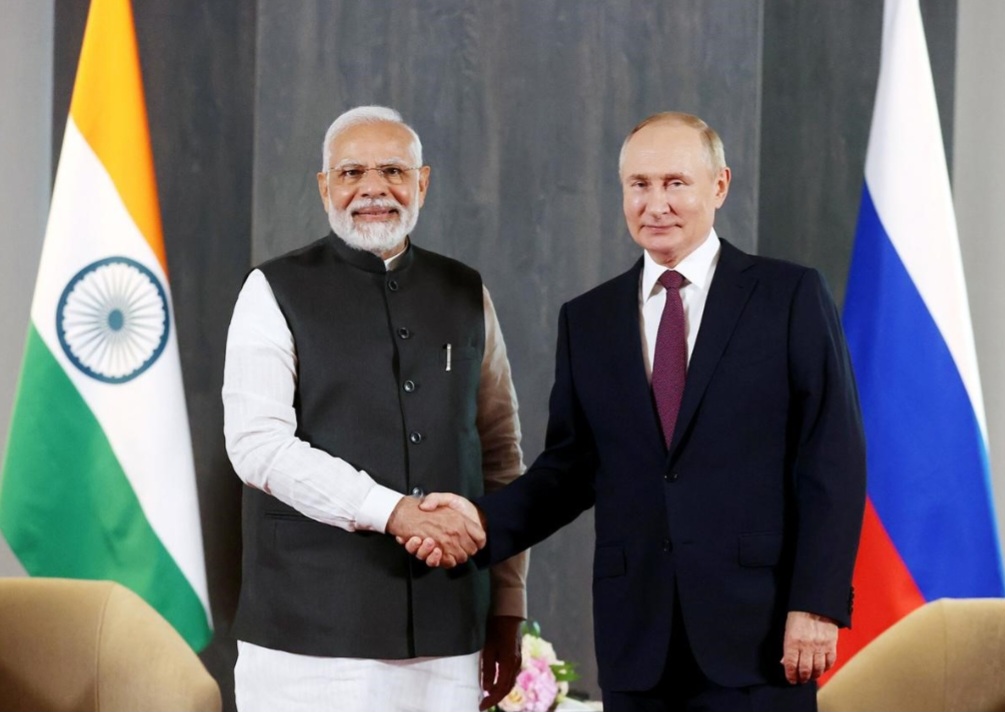
The Reciprocal Exchange of Logistics Agreement (RELOS) is a significant bilateral administrative arrangement that will enhance military cooperation between India and Russia. The RELOS agreement sets out procedures governing the movement of military formations, warships and military aircrafts between Russia and India, as well as the arrangements for providing logistical support to each other’s forces. It is a military pact which allows both the nations to draw on each other’ ports, airfields and facilities for refuelling, resupply, maintenance and berthing. The pact is administrative rather than a mutual-defence treaty. It will be applicable during both wartime and peacetime missions. The agreement was signed earlier in 2025 and moved through Russian parliamentary ratification late in the year. President Vladimir Putin signed the law formally enacting the pact on Russia’s side. RELOS was ratified by the State Duma, the lower house of parliament, on December 2, followed by approval from the Federation Council, the upper house, on December 8.
Its Effects
RELOS agreement enables armed forces to operate far from home bases for longer durations. Access to partner-country ports, airbases, and logistics hubs reduces dependence on long supply chains, thereby improving mission endurance during joint exercises, patrols, or humanitarian operations. It will enable smoother utilisation of the host nation’s existing logistics networks and enhance the ability to respond swiftly to crises. It will also provide a strategic edge to the military operations of both countries. Exposure to advanced logistics practices of partner militaries helps improve domestic logistics planning, inventory management, and maintenance standards, contributing to long-term military modernization. It enhances India’s maritime outreach and influence in strategically important regions. It will boost Maritime Domain Awareness (MDA) and shared logistics facilities would enable better information exchange about maritime activities. Access to refuelling and replenishment facilities enhances naval and air force presence in critical regions such as sea lanes of communication, choke points, and contested areas, contributing to deterrence and regional stability. The practical effect of RELOS depends on which facilities the two sides make available and how often they are used. Russia’s territory spans the Arctic, the Pacific, Baltic and Black Sea littoral zones. Indian access to certain Russian ports or airfields could extend India’s operational options from the Indian Ocean into higher latitudes and Eurasian approaches. The arrangement could open access to scores of Russian naval and air facilities stretching from Vladivostok to Murmansk, a capability that, if operationalised, would materially expand Indian options in areas like the Northern Sea Route and Russia’s Far East. That prospect is strategically significant because it deepens India’s ability to operate in theatres that were previously remote or logistically difficult to sustain. For Russia, reciprocal access to Indian ports in the Indian Ocean would make long-distance deployments, logistics for joint operations and Humanitarian Assistance and Disaster Relief (HADR) missions more sustainable in the Indo-Pacific region. RELOS balances India’s logistics agreements with Quad countries and Russia’s non-Quad stance. It strengthens Russian presence in Indo-Pacific without Quad involvement. It Counterbalances US influence and China’s regional role for both India and Russia. The pact gives India an additional logistics partner and reduces single-point dependencies. That diversification can be seen as strengthening autonomy rather than constraining it. India already has logistics arrangements and defence cooperation with other partners such as the United States, France and Australia. Adding a formal logistics arrangement with Russia expands the menu of partners and complicates attempts by any one external power to limit India’s operational freedom. By sharing existing logistics infrastructure instead of creating new facilities abroad, countries can significantly reduce operational costs. This reimbursement model avoids heavy upfront investments while still ensuring logistical availability. RELOS would strengthen the strategic partnership between India and Russia, deepen trust and institutionalize defence cooperation between the two countries. It acts as a confidence-building measure and signal long-term strategic intent, reinforcing broader diplomatic and security relationships. In UN peacekeeping, anti-piracy patrols, and multinational task forces, RELOS simplifies logistics coordination. Shared support structures reduce duplication of effort and improve mission efficiency. RELOS agreement demonstrates India’s ability to operate with major powers or regional partners like Russia, signalling strategic depth and readiness. This can have a deterrent effect by showcasing extended operational capabilities.
Its Challenges
Logistics cooperation is as much about common procedures and standards as it is about geography. India will need to invest in interoperability protocols, legal frameworks, and supply-chain agreements so that visiting Russian and Indian units can be serviced smoothly without ambiguity. Many Russian bases are optimized for Russian systems and logistics chains and currently unsuitable for Indian machines. India will need to evaluate which ports and airfields can practically and safely service Indian platforms and vice versa, and what upgrades or mutual-standard provisions are necessary for both the nations. Differences in equipment, fuel standards, accounting procedures, and documentation complicate execution. India will have to be careful of the legal and administrative details as such agreements work only if customs, diplomatic clearances, status of forces, health and medical protocols and liability rules are clearly spelled out. Issues such as jurisdiction, liability, taxation, and dispute resolution can be contentious. While India and Russia can agree bilaterally, the use of certain technologies, spare parts, dual-use equipment, banking or payment channels could be complicated by third-country sanctions or export controls. It may affect relations with Western institutions or investors sensitive to geopolitical alignments. Both, India and Russia will need compliant mechanisms to avoid exposure to secondary sanctions or legal entanglements. Neighbouring countries or adversaries may view such agreements as threatening resulting in escalation of regional insecurity. Maintaining good relations with them and gaining their trust is crucial. Such agreements complicate a country’s stance during international conflicts involving the partner state. Access to ports, airbases, and logistics hubs carry a risk of leakage of strategic or operational information resulting in exposure of sensitive facilities. Sharing logistics systems can also expose vulnerabilities in supply chains and infrastructure. RELOS does not guarantee support during wartime and access may be restricted due to domestic laws or political decisions. The agreement may be ineffective in fast-moving or high-intensity conflicts. While RELOS agreements enhance logistical efficiency and military reach, they are not cost-free. Strategic autonomy concerns, security risks, geopolitical repercussions, and operational complexities limit their effectiveness.
Indo-Russian Engagement
Politically, both countries engage through annual meetings of two Inter-Governmental Commissions. One focuses on Trade, Economic, Scientific, Technological, and Cultural Cooperation (IRIGC-TEC) and another on Military-Technical Cooperation (IRIGC-MTC). India and Russia regularly conduct the Tri-Services exercise ‘INDRA’. The joint military programs between both the nations include BrahMos cruise missile program, 5th generation fighter jet program and Sukhoi Su-30MKI program. India has purchased S-400 Triumf, T-90S Bhishma and AK-203 Rifles from Russia. Kamov Ka-226 200 are going to be manufactured in India under the Make in India initiative. Russia remains India’s largest and most important arms seller.
India needs to treat RELOS as a tool to increase operational flexibility and resilience, not as a geopolitical pivot. If implemented with carefully, with multiple logistics lines, legal safeguards, and transparent diplomacy, RELOS will add to India’s strategic autonomy.



