
By: Col Ashwin Baindur (Retd)
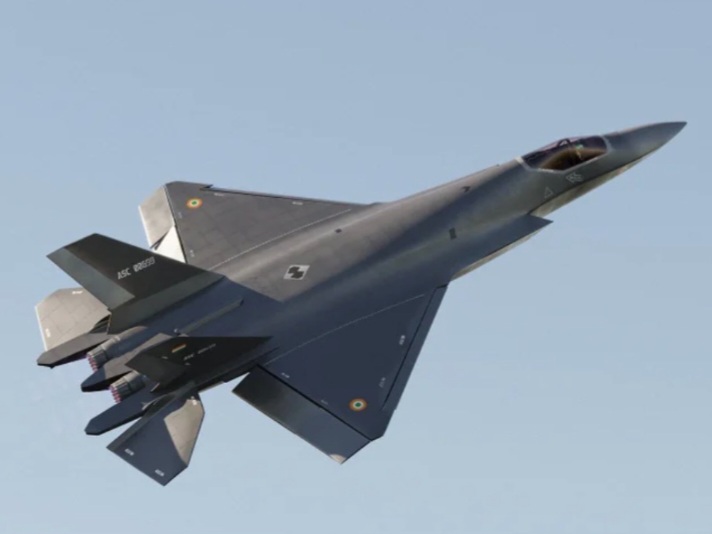
India has a fighter aircraft problem — we simply do not have enough of them. The Indian Air Force (IAF) is authorised to operate 42 squadrons but today fields barely around 29 effective squadrons, many composed of Jaguars, MiG-29s and Mirage-2000s nearing retirement. If theatre commands are implemented — redistributing aircraft across independent theatres — internal assessments suggest the requirement could rise to ~ 55 squadrons. Whether one accepts the upper figure or not, the conclusion is inescapable: India needs a dramatic expansion in combat aircraft strength.
From today’s depleted strength, the IAF needs not only around 26 squadrons to reach 55, but also replacements for around 10–12 squadrons of legacy platforms. That implies a requirement exceeding 35–38 squadrons over the next decade — larger than the current IAF fleet itself. Even reaching sanctioned strength would require inductions equal to the size of today’s combat force. Put simply, India is running a fighter deficit of strategic proportions.
Why indigenous development struggled
India’s indigenous fighter journey, though visionary, was handicapped by two structural realities.
1. A steep technological climb
We attempted to leap from an HF-24 era knowledge base to building a modern multi-role fighter. The Light Combat Aircraft (later christened Tejas) was initially conceived as a simple MiG-21 replacement — cheap, light and easy to manufacture. Over time the goalpost shifted to a highly capable 4+/4.5th-generation platform with world-class avionics, fly-by-wire (FBW), radar, electronic warfare, and weapons-integration capabilities. Specifications increased, but the research and development capability had to be built from scratch — every failure, delay and learning curve had to be paid for in time — exacerbated by the fact that the main development was done by government agencies.
Compounding delays, the 1998 nuclear tests triggered technology sanctions. Foreign consultants — including Lockheed Martin, who assisted ADA in validating LCA’s flight-control system — had to disengage due to U.S. restrictions after Pokhran-II. This forced India to develop all critical FBW technologies independently. A deepening commitment to indigenisation followed — culminating in today’s Atmanirbharta drive.
2. The engine bottleneck
Our greatest shortfall was propulsion. The Kaveri engine, though a technological milestone, never matured to Tejas-use power levels. We relied on the American F-404 for Tejas and now the F-414 for the prospective Tejas Mk-2, Twin Engine Deck-based Fighter and Advanced Medium Combat Aircraft Mk-1 — both critical choke points. Delivery schedules will determine how fast we can build aircraft, and it is uncertain whether supply will match our needs. Even though GE has agreed to joint-production of F-414 in India, export controls and delivery timelines remain a strategic vulnerability. A future indigenous 110–120 kN engine is essential for real autonomy and scale. A recent agreement with Safran for development of a 110-120 kN engine, with full transfer of technology and production-cum-export rights, is a step in the right direction.
It has to recognised that if engine deliveries lag or sanctions return, our entire combat-fleet modernisation could slow, or even halt. The long-term solution must be a Kaveri-derivative capable of replacing the F-404 and later competing with the F-414.
Foreign acquisition – poor outcomes, slow pace
In four decades, we have inducted only two squadrons of Rafales and a handful of replacement Su-30MKIs. The MMRCA processes dragged on without result. Rafale is excellent, but expensive. Some contract elements remain pending, and most critically, France will not share mission-computer source codes or deep ToT, ensuring dependence for weapons integration through the aircraft’s life-cycle, a situation incompatible with India’s thrust for indigenisation. Production slots are full, meaning delivery for additional orders would take close to a decade. Rafale thus becomes a capability enhancer over time, but not a fleet builder.
Why the Su-57 deserves consideration
Russia offers the Su-57 — a 5th-generation stealth fighter. It may not match the F-22/F-35 in all metrics, but for India it offers several advantages:
- It is a 5th-generation stealth aircraft bringing completely new capabilities to the IAF, unlike 4.5th-generation alternatives.
- Full production/ToT offers are reportedly on table.
- We already operate Su-30s, easing training, logistics and maintenance integration.
- HAL’s production ecosystem can adapt to Su-57 quickly.
- Delivery timelines may be within 5–6 years instead of 10–12.
- Russia historically imposes minimal operational restrictions.
- Cost per capability delivered appears favourable versus Rafale.
While analysts debate Su-57 maturity, for India it remains the only near-term 5th-gen platform with potential for local manufacture, weapons integration freedom and technology access.
Crucially, India needs numbers, not token strength. Two or three squadrons of Su-57 add some capability as well as prestige, not deterrence. To matter, we need at least 9–10 squadrons — four for each front, one for the maritime/southern theatre. Indigenous manufacture would accelerate Atmanirbharta, lift our fighter-technology base by two decades overnight, and create spillover benefits for AMCA and even 6th-gen projects. Access to the Izdeliye-30 engine could relieve AMCA engine pressure and allow time to develop an Indian 120+ kN class engine.
Affordability & strategic logic
Some argue India cannot afford a major program. The counterpoint is simple: India cannot afford NOT to. Spending massively on limited Rafales gives quality but no quantity, no sovereignty in software, and little indigenisation. Large-scale Su-57 manufacturing, in contrast, builds both numbers and capability while strengthening domestic aerospace industry.
Hurdles to Su-57 procurement remain but they are external to the platform-related arguments made above. Procurement from Russia could draw CAATSA sanctions from the United States. India faces problems in paying for trade with Russia due to global financial sanctions. Lastly, India has a balance-of-payments problem with Russia of the ratio 10:1 in favour of Russia. Lastly, India’s geopolitical stance has been a strategic balancing, with the West on one hand, and Russia/China on the other; this complicates procurement. Regardless, it is in India’s interest to do what is best in its long-term security interests, and a very strong case can be made that procurement of the Su-57 is in India’s best interests.
What India should aim for
India needs numbers, not boutique fleets. Small batches of each type — Jag/Mirage/MiG-29/Su-30/Rafale/Su-57 — increase logistics complexity without mass.
A credible path could look like this:
- Keep legacy fleets operational safely as long as possible.
- Build Tejas Mk-1A in volume; accelerate Mk-2 development.
- Push GE for timely F404/F414 deliveries while fast-tracking Kaveri maturation.
- Pursue a Su-57 production negotiation, contingent on deep ToT and sovereign integration rights.
- Execute Super-Sukhoi upgrades rapidly.
- Commit to long-term indigenous mass production: e.g., 150–200 Tejas Mk-1A, 200 Mk-2, 200 AMCA over life-cycle, not token orders.
- Use the momentum to advance toward a 6th-gen program.
Only then can India realistically reach 42 squadrons, and eventually 55.
Importantly, India cannot afford gaps in airpower — what we truly cannot afford is delay.
About the Author
Col Ashwin Baindur (Retd) is a veteran combat engineer. He is a member of the Current and Strategic Affairs Forum (CASA) and the United Services Institution (USI).



