
By: Capt Vikas Anand, Indian Navy
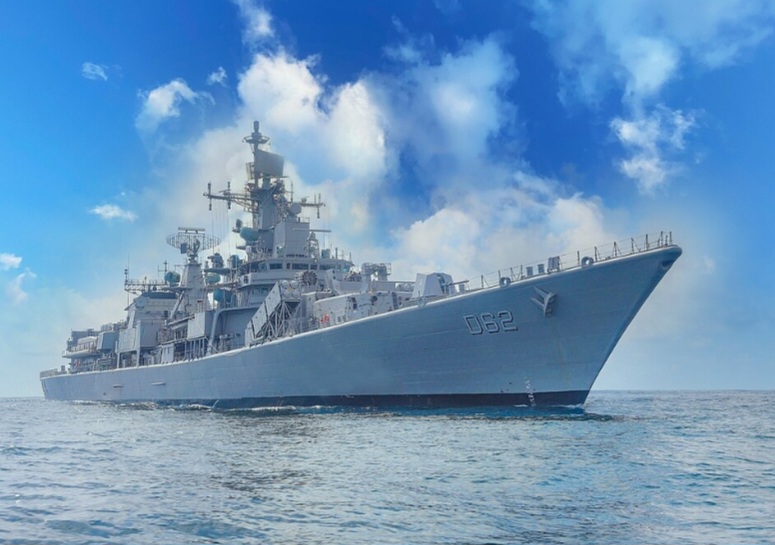
The Indian Navy owes its origins to the warrant from the Lord High Admiral which authorised combatant status to the erstwhile Indian Marine on 01 May 1830. From the humble beginnings in the late 19th century, the (Royal) Indian Navy experienced phenomenal expansion during the Second World War. The expansion continued post-Independence, and the Indian Navy has grown in strength to become the formidable force that we know today.
Despite this incredible progress over the years, one question looms in the minds of many Indians – What does the Indian Navy do?
To a layman, the difference between Merchant Navy, which has become a sought-after career option for many youngsters, and the lesser exposed Indian Navy, may not be very apparent. This article is aimed towards simplifying the understanding of Indian Navy’s role, and highlight the major differences between Indian Navy and Merchant Navy.
In very simple terms, Merchant Navy does at sea, what the trucks do on the roads, that is, transport items from one place to the other. The items carried by Merchant Vessels or Merchant Ships can vary from food products like rice, wheat grains, pulses, & packaged and canned food to household products like electronics, furniture, clothes, shoes, mobile phones etc. In addition, the Merchant Tankers, which are specialised Merchant Ships, carry fuel oil, coal, LPG, CNG, and other fuel products. The Merchant Shipping industry acts as a prime mover of the country’s trade, since 95% of India’s trade by volume and 70% by value is conducted via sea. Thus, the contribution of Merchant Shipping for the economic growth of the country is humongous. Owing to this importance, there is a need to secure the trade through the sea. And this is where the Indian Navy comes in.
The Indian Navy is responsible for seaward defence of the nation, which is undertaken primarily through the warships, capable of carrying weapons, including missiles of varying ranges, and aircraft. The Indian Naval Ships patrol waters around the country to thwart any Maritime Security incident in the area, including attack on trade bound to/ from India. Other types of Maritime Security incidents include, but are not limited to, anti-piracy operations, anti-hijack operations, Search and Rescue Operations (saving lives at sea), etc. The Indian Navy is also the first responder in case of any natural calamity in the Indian Ocean Region, and the deployed Indian Naval ships are always ready to provide support in such a scenario. These include the Humanitarian Assistance and Disaster Relief Operations post calamities like a cyclone, flood, earthquake or Tsunami, as also providing assistance to civil administration to save lives of the citizens.
While the Merchant Navy is all about ships, Indian Navy includes ships, submarines and aircraft, in its arsenal. And each of these assets are further sub-divided into various classes of ships, submarines, helicopters, patrol aircraft, fighter aircraft, and UAVs. The one factor common to all Merchant Navy assets is that all Merchant ships carry different types of cargo all over the world. However, the one common thread binding all assets of Indian Navy is the responsibility of defence of the nation. All of the Indian Navy’s assets are deployed to ensure safety and security of seafarers, and the seas around them.
Over the last few decades, personnel from across the length and breadth of the country have joined Indian Navy, and this has improved the understanding of work done by Indian Navy. The misnomer about the number of sailing days, which was prevalent in the yesteryears about Indian Navy – six months onboard the ship(s), and six months at home, has also been addressed owing to the improvements in awareness levels as also due to ingress of social media.
The Indian Navy, like any other Defence Force, is up, about and ticking 24X7. Indian Naval ships sail for specific missions, of different durations, and the crew is granted leave or is turned around depending upon the mission. Whilst in harbour, the ship becomes a place of work, where personnel work during the working hours, and return home to their families in the evening. Additionally, the ship also acts like a home to the non-married personnel, who have their earmarked living spaces within the ship. Thus, while the personnel work on the ship whilst in harbour, they work as well as stay on the ship when the ship is sailing.
Let me come back to the main question – What does the Indian Navy do?
The primary purpose of the Indian Navy is to prevent war and conflict. However, in case they occur, the Indian Navy would play a decisive role in bringing them to an early and favourable conclusion. The Indian Navy is the principal manifestation of India’s maritime power, while playing a central role in safeguarding and promoting her security and national interests in the maritime domain.
But, how is it done?
Indian Naval assets are deployed in the waters not only around India, but around the world. At any point of time, a number of Indian Naval Ships, submarines and aircraft are sailing or flying at sea, either securing the waters around the country, or providing assistance to areas which have suffered a natural calamity, or engaging with navies around the world, to enhance maritime cooperation with the friendly foreign countries. And all this is possible only due to the sincere men and women working tirelessly, in the middle of the ocean for days together, with the sole aim of keeping the seas around the country safe and secure.
So, the next time you see a ship, submarine or aircraft with the markings of Indian Navy, or any person donning the white uniform of Indian Navy, remember that they are the silent naval warriors who brave the mighty seas, to ensure peace on land.
Sam No Varunah



